Why Most Real Estate AI Implementations Fail (And How to Avoid It)
Here's an uncomfortable truth: Most agents who try to implement AI in their business fail. Not because the technology doesn't work—but because they approach it wrong.
I've seen hundreds of AI implementations. The successful ones share common patterns. So do the failures.
The Failure Statistics
According to recent industry studies:
- 73% of AI implementations fail to deliver expected results
- 68% of agents abandon AI tools within 90 days
- $2.4 billion wasted annually on unused AI subscriptions
- 81% of teams underutilize AI tools they've purchased
These aren't just numbers—they represent wasted time, money, and opportunities.
The 7 Reasons AI Implementations Fail
Failure #1: No Clear Problem Definition
What happens: Agents hear "AI" is the future, buy tools, but don't know what problem they're solving.
Why it fails: You can't measure success if you don't know what success looks like.
The fix: Start with the problem, not the technology. "I need to respond to leads faster" beats "I need AI" every time.
Failure #2: Tool Shopping Before Process Mapping
What happens: Buying AI tools before understanding current workflows.
Why it fails: AI amplifies your existing processes. If your processes are broken, AI makes them broken faster.
The fix: Map your current process → Identify bottlenecks → Find AI that addresses those specific bottlenecks.
Failure #3: No Change Management
What happens: Leaders buy AI tools, expect the team to adopt them automatically.
Why it fails: People resist change, especially when they don't understand the "why" behind it.
The fix: Involve your team early, explain the benefits, provide training, and celebrate early wins.
Failure #4: Unrealistic Expectations
What happens: Expecting AI to magically solve all problems overnight.
Why it fails: AI is powerful but not magic. It requires setup, tuning, and ongoing optimization.
The fix: Set realistic timelines (60-90 days for meaningful results), measure incrementally, and iterate.
Failure #5: No Integration Strategy
What happens: Buying AI tools that don't connect to existing systems.
Why it fails: Disconnected tools create more work, not less. Your team won't use tools that complicate their workflow.
The fix: Choose AI that integrates with your current tech stack or commit to switching platforms entirely.
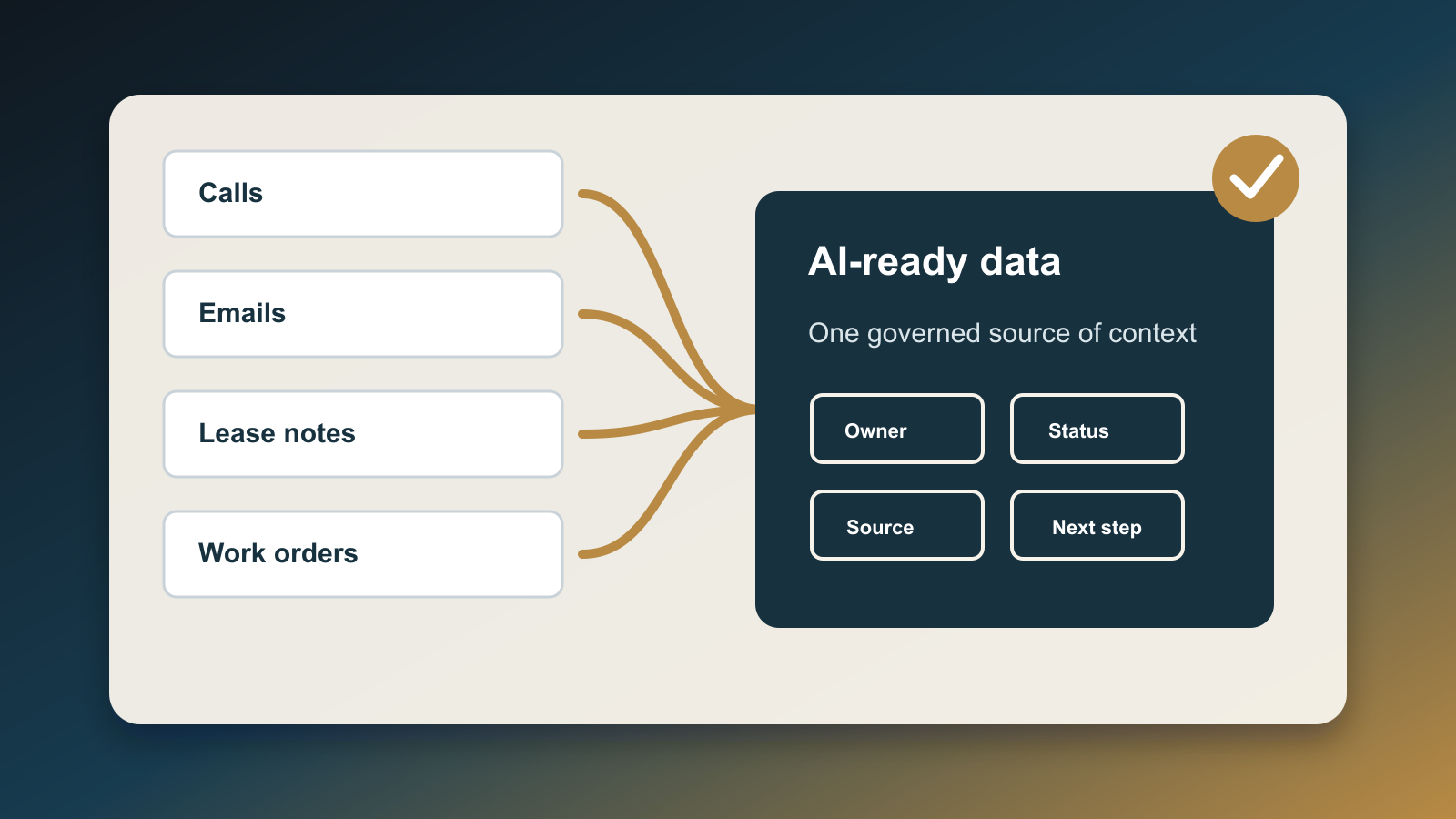
Failure #6: Insufficient Data
What happens: Implementing AI without clean, sufficient data to train it.
Why it fails: AI learns from data. Bad data = bad AI decisions.
The fix: Clean your data first. Remove duplicates, standardize formats, fill gaps. Then implement AI.
Failure #7: No Ongoing Optimization
What happens: Setting up AI once and assuming it's "done."
Why it fails: AI needs continuous tuning, feedback loops, and improvements to stay effective.
The fix: Schedule weekly reviews, track performance metrics, and adjust based on results.
Real Failure Examples (And What Was Learned)
Case Study: The $50K AI Disaster
A luxury real estate team spent $50K on an enterprise AI CRM with all the bells and whistles.
What went wrong:
- No one trained the team
- The interface was complex and confusing
- It didn't integrate with their transaction management system
- Within 3 months, everyone went back to spreadsheets
The lesson: Fancy features don't matter if no one uses them. Start simple, get adoption, then add complexity.
Case Study: The AI That Made Things Worse
An agent implemented an AI chatbot to handle leads.
What went wrong:
- The chatbot gave generic, unhelpful responses
- It frustrated leads instead of helping them
- Conversion rates actually dropped
- The agent deactivated it after 6 weeks
The lesson: AI quality matters. Cheap, poorly configured AI can damage your brand.
The Success Framework
Here's the framework that works:
Phase 1: Diagnosis (Week 1-2)
- Map current processes
- Identify pain points
- Quantify time/money impact
- Define success metrics
Phase 2: Strategy (Week 3)
- Research tools that solve specific problems
- Verify integrations with current stack
- Create implementation timeline
- Prepare team communication plan
Phase 3: Pilot (Week 4-6)
- Start with one high-impact use case
- Implement with small team subset
- Gather feedback daily
- Iterate based on learnings
Phase 4: Scale (Week 7-10)
- Roll out to full team gradually
- Provide ongoing training and support
- Monitor adoption and results
- Celebrate wins publicly
Phase 5: Optimize (Week 11+)
- Review metrics weekly
- Gather user feedback
- Adjust workflows and configurations
- Add additional AI capabilities systematically
The Questions to Ask Before Implementing AI
Before buying any AI tool, answer these:
-
What specific problem does this solve? Be precise.
-
How will we measure success? Define clear metrics.
-
What's the total cost? Include time, training, and opportunity cost.
-
Does it integrate with our current tools? Disconnected tools fail.
-
Who will champion this internally? Change needs an advocate.
-
What's our rollout timeline? Rushed implementations fail.
-
What's our fallback plan? If it doesn't work, what's Plan B?
If you can't answer these confidently, you're not ready to implement.
The Success Indicators
You know your AI implementation is working when:
- Team members request more AI tools (not resist them)
- Measurable improvements in efficiency or conversion
- Problems you expected to solve are actually solved
- New opportunities emerge that weren't visible before
- You couldn't imagine going back to the old way
The Competitive Reality
Here's the truth: AI in real estate isn't optional anymore. The agents winning are using AI effectively. The question isn't "Should we use AI?" but "How do we implement AI successfully?"
The difference between failure and success isn't the technology—it's the approach.
Your Next Move
If you've failed at AI implementation before, you're not alone. Most agents have. The key is learning from those failures and approaching it differently next time.
If you haven't implemented AI yet, you have a chance to do it right the first time.
Book a consultation to build your AI success plan.

Written by
Ben Laube
AI Implementation Strategist & Real Estate Tech Expert
Ben Laube helps real estate professionals and businesses harness the power of AI to scale operations, increase productivity, and build intelligent systems. With deep expertise in AI implementation, automation, and real estate technology, Ben delivers practical strategies that drive measurable results.
View full profile