ChatGPT vs Custom AI Agents: What Business Owners Need to Understand
You’ve got two broad choices: use something off the shelf (ChatGPT, Copilot, or a vendor’s AI) or build or commission custom AI agents that run your workflows, use your data, and live inside your systems. Both are valid. The mistake is treating them the same.
Here’s what business owners need to understand — without the hype.
What We’re Actually Comparing
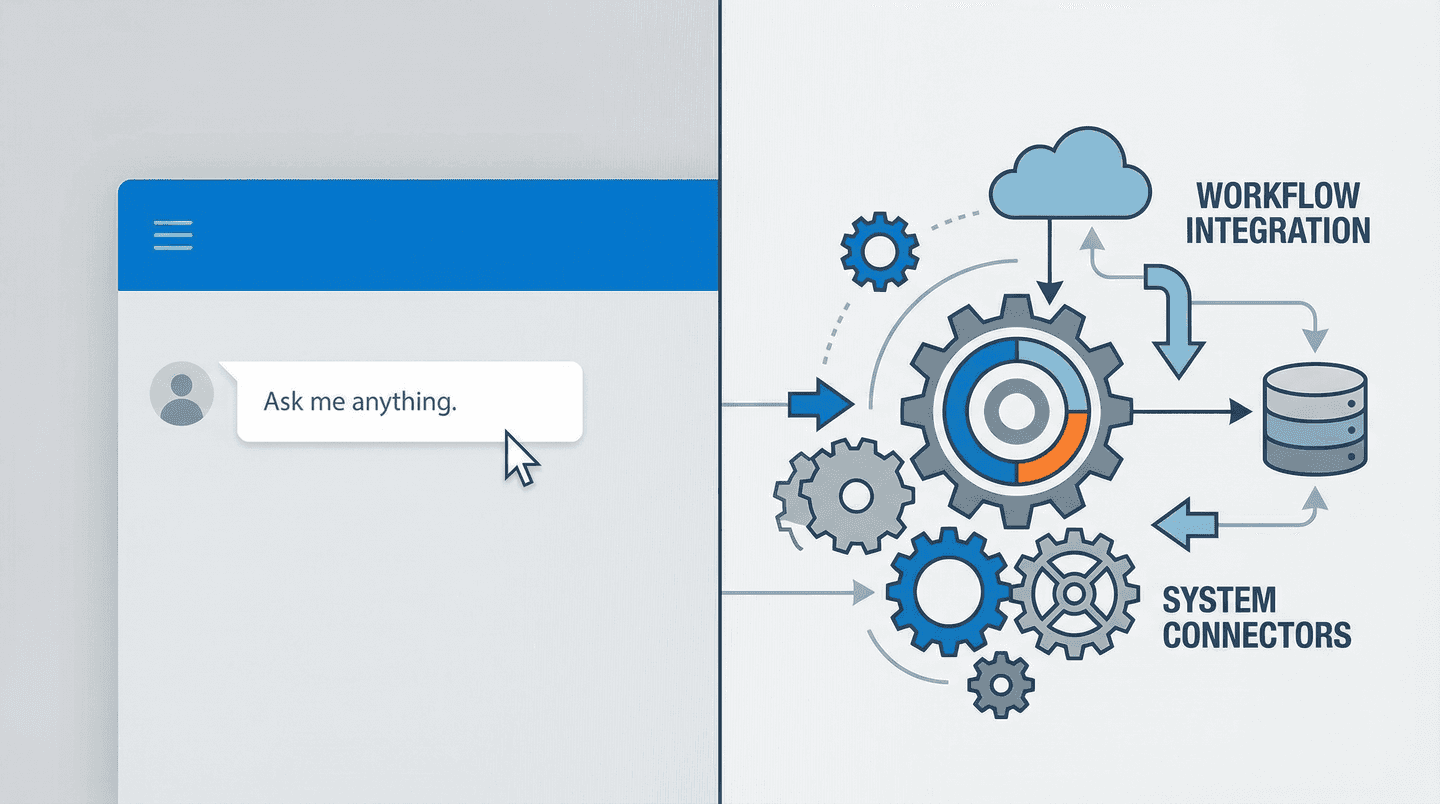
ChatGPT (and cousins) — General-purpose conversational AI. You can add custom instructions, upload files, or use APIs. It’s fast to start, cheap to try, and limited to what the product and your prompts can do. You don’t own the model or the UX; you’re a user of someone else’s product.
Custom AI agents — Purpose-built systems that use AI (often the same underlying models) but are designed for your workflows: your CRM, your knowledge base, your rules. They can run 24/7, call your APIs, and enforce your business logic. You (or your vendor) build and maintain them. Higher upfront cost and control.
The real question isn’t “ChatGPT or custom?” It’s “For this problem, do I need a general tool or a dedicated system?”
When ChatGPT (Off-the-Shelf) Makes Sense
Use it when:
- Quick answers and drafts — Emails, ideas, first-pass copy, simple Q&A. No integration required.
- Low budget and low risk — You’re experimenting or solving a one-off need. Setup in hours; cost in the tens to low hundreds per month.
- No deep integration — You don’t need the AI to read from your CRM, trigger actions in your tools, or enforce compliance automatically.
- Standard use cases — Internal FAQ, brainstorming, content drafts. The vendor handles updates and security at the platform level.
ChatGPT and similar tools are great for productivity and exploration. They are not a replacement for a system that has to act on your data, follow your rules, and stay inside your stack.
When Custom AI Agents Make Sense
Use them when:
- Workflow automation — The AI should do something: qualify leads, route tickets, update records, send follow-ups based on your rules.
- Your data, your rules — You need the AI to use only your knowledge base, your CRM, your compliance rules. No “general knowledge” that might contradict your policies.
- Integration is the point — The agent must call your APIs, write to your database, or drive your existing tools. That’s custom by definition.
- Competitive advantage — How you use AI is part of your offer (e.g. AI for realtors, AI automation). Off-the-shelf gives everyone the same baseline; custom lets you differentiate.
- Compliance and control — You need audit trails, data residency, or guarantees that the AI won’t hallucinate outside a sandbox. Custom builds (or serious vendor customization) can give you that.
Custom agents cost more upfront ($5k–50k+ and $100–1k+ per month in many cases) and take longer to build. The payoff is ownership, integration, and behavior that matches your business.
Cost and Complexity: Rough Reality Check
ChatGPT / off-the-shelf:
- Setup: Often $0–2k (subscriptions, light config, maybe a wrapper).
- Ongoing: $20–200+/month depending on usage and tier.
- Timeline: Hours to days to be useful.
Custom AI agents:
- Setup: $5k–50k+ (design, build, integrations, testing).
- Ongoing: $100–1k+/month (hosting, APIs, maintenance, updates).
- Timeline: Weeks to months to production.
So: simple, generic need → off-the-shelf. Workflow-critical, integrated, or differentiated need → custom (or heavily customized vendor).
How to Decide
Ask:
-
Does the AI need to do something in my systems? (Update CRM, send emails, route leads.) → If yes, you’re in custom or “customized product” territory.
-
Do I need it to use only my data and my rules? → If yes, you need a controlled environment (custom agent or a product that’s built for that).
-
Is this a “nice to have” or a “must have” for how we operate? → Nice to have → try off-the-shelf first. Must have → plan for something built or deeply integrated.
-
What’s my budget and timeline? → Tight and fast → ChatGPT or similar. Larger and longer → custom or vendor-led build.
Don’t assume “we’ll start with ChatGPT and later build custom.” Sometimes that’s right. Sometimes the use case is so different that starting with the wrong paradigm wastes time. Map the outcome first, then pick the tool.
The Middle Ground: Customized Off-the-Shelf
Many products sit in between: ChatGPT or another model under the hood, but with your knowledge base, your branding, and pre-built connectors (e.g. to Slack, your CRM, your help desk). You’re not building from scratch, but you’re not using plain ChatGPT either.
That can be the right fit when:
- You need “my data, my rules” but not full custom logic.
- You want to move faster than a full custom build and cheaper than a one-off agent.
- The vendor’s roadmap aligns with your use case (e.g. AI knowledge base, AI content engine).
Evaluate these like any vendor: security, compliance, lock-in, and total cost over 2–3 years.
Bottom Line for Business Owners
- ChatGPT and off-the-shelf — Best for speed, cost, and generic productivity. Use them for drafting, research, and simple Q&A. Don’t expect them to run your business.
- Custom AI agents — Best when the AI must act in your systems, use only your data, and reflect your rules. Higher cost and complexity; payoff is control and differentiation.
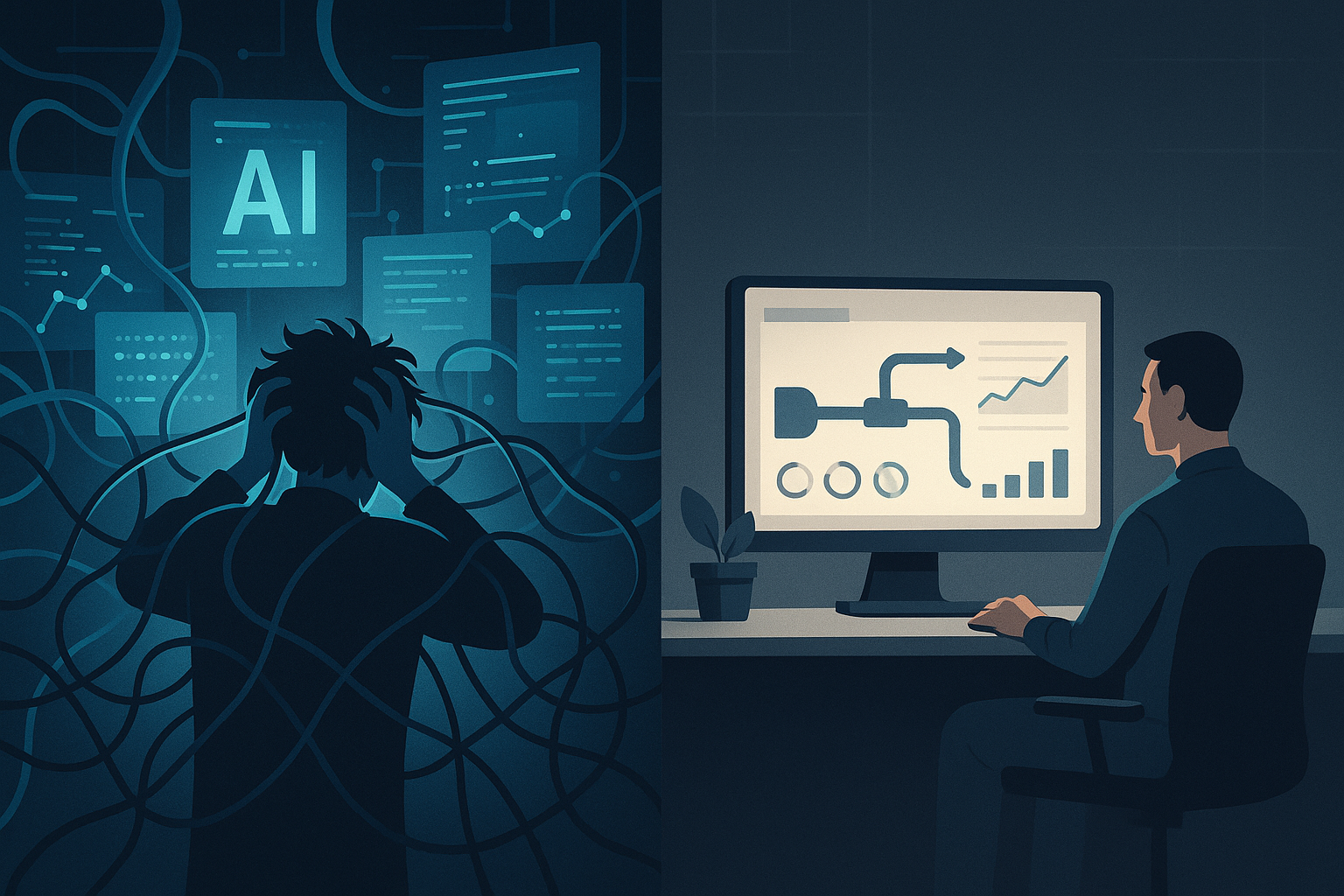
- Choose by outcome — What must the AI do? Then match the tool. Confusing “chat” with “workflow” leads to the wrong investment.
Want to map AI to your business without the hype? We help owners and teams choose the right AI strategy — from AI literacy to custom automation.

Written by
Ben Laube
AI Implementation Strategist & Real Estate Tech Expert
Ben Laube helps real estate professionals and businesses harness the power of AI to scale operations, increase productivity, and build intelligent systems. With deep expertise in AI implementation, automation, and real estate technology, Ben delivers practical strategies that drive measurable results.
View full profile