Build an Agent Onboarding Console Before AI Coaches the Team
AI coaching sounds attractive for real estate teams because the onboarding problem is real: new agents need scripts, CRM habits, market context, follow-up discipline, compliance judgment, and confidence before they can create consistent production. The weak move is to drop AI into that gap and hope it becomes a trainer. The stronger move is to build an agent onboarding console first.
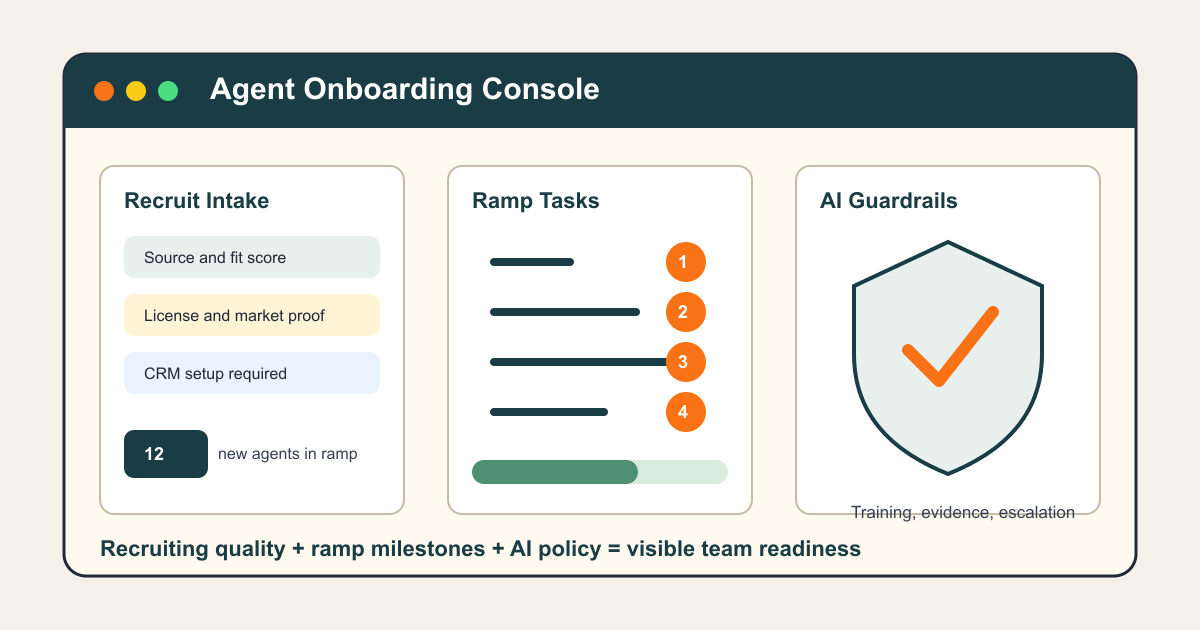
An onboarding console is not another course library. It is the operating record that shows who was recruited, why they joined, what they were promised, what systems they can access, what coaching they need, what evidence proves they are ramping, and when a human leader must step in. Once that record exists, AI can summarize progress, recommend coaching prompts, draft practice scenarios, and surface stalled agents without turning onboarding into a black box.
The timing matters. Recruiting Insight and Lone Wolf reported that Q1 2026 agent moves rose sharply, with external brand changes up 25% quarter over quarter and internal moves up 38% year over year. Their report argues that model type is not the deciding factor; execution quality separates stronger brokerages from weaker ones. That is the point for onboarding. Recruiting creates the opening, but ramp execution determines whether the new relationship becomes production, retention, or another quiet departure.
The HR market is moving the same direction. SHRM's 2026 AI in HR research found that AI is already used most often in recruiting, HR technology, learning and development, and employee experience, yet more than half of HR professionals said their organizations do not formally measure AI investment success. Real estate teams should treat that as a warning. If an AI coach is added before the onboarding system defines success, the team may generate more content without knowing whether agents are becoming more productive, more compliant, or more likely to stay.
What the console should track
Start with the recruiting promise. Every agent should have a structured intake record: source, production history, target segment, market focus, personal goals, tool proficiency, business plan, and the specific reasons they said yes. That record prevents the handoff from recruiter to broker, team lead, mentor, transaction coordinator, or marketing manager from becoming a game of telephone.
Next, track the readiness stack. A new agent cannot benefit from AI coaching if the basics are incomplete. The console should show license verification, MLS and lockbox access, CRM account setup, lead routing status, email and calendar configuration, brand assets, compliance documents, listing presentation access, transaction checklist access, and approved marketing templates. AI can remind people that these tasks are late, but it should not invent readiness that the systems have not confirmed.
Then define ramp milestones. Do not measure onboarding by course completion alone. Track whether the agent has imported their sphere, segmented contacts, completed a practice buyer consultation, reviewed local market proof, sent approved follow-up, attended a shadow appointment, built a listing packet, completed fair housing and disclosure refreshers, and logged first live client activity in the CRM. These milestones make coaching concrete.
Finally, track intervention rules. Some agents need accountability every few days; stronger producers may only need strategic check-ins. The console should make that difference visible. It should flag stalled setup, low CRM activity, missing mentor notes, unanswered compliance items, low confidence scores after practice scenarios, or no client-facing activity after a defined period. Those flags tell leaders where human coaching is required.
Where AI belongs
AI should work from the console, not around it. Once the onboarding record is structured, AI can generate a weekly ramp brief for each agent: what changed, what is overdue, what risk is emerging, and what the next coaching conversation should cover. It can convert broker notes into follow-up tasks, produce role-play prompts based on the agent's market niche, summarize local market updates into training examples, and draft mentor questions tied to real behavior.
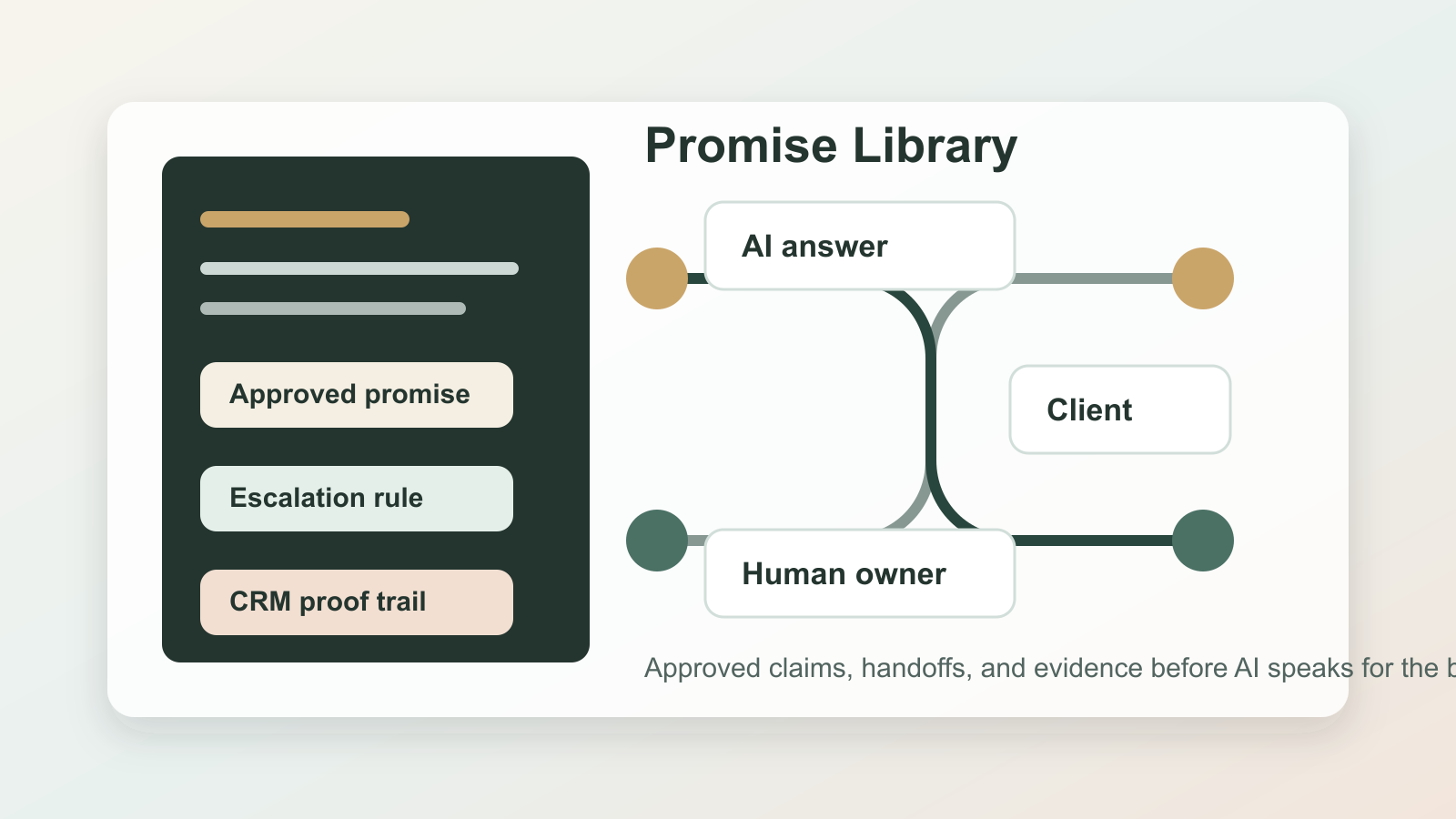
That is different from asking a chatbot to train agents generically. Generic coaching ignores local brand standards, state forms, team roles, compensation plan details, broker supervision rules, CRM conventions, and the promises made during recruiting. A console gives AI the context boundary. It tells the system what it may coach on, what it must not answer, and when to escalate.
The need for boundaries is clear in real estate AI adoption data. NAR reported in February 2026 that most surveyed agents are using AI or planning to use it, while accuracy, compliance, market-data interpretation, learning curve, and fair housing concerns remain prominent. That combination means teams do not need another motivational AI training push. They need a repeatable way to teach safe use, inspect output, and connect AI habits to actual client work.
Zillow's 2026 Agent Trends Survey points to another reason this matters: agents want tools that reduce mental load, and many still operate across multiple systems each week. If onboarding adds one more disconnected portal, adoption will suffer. The console should become the single view of ramp progress, with AI acting as an assistant inside the workflow rather than another destination agents must remember to check.
The practical implementation
Build the first version with five tables or CRM objects: candidate/recruit record, onboarding checklist, ramp milestone log, coaching note, and escalation queue. Each item should have an owner, due date, evidence field, status, and next action. Keep the taxonomy small. For example, setup, training, CRM activity, client activity, compliance, marketing, transaction readiness, and coaching.
Then add three dashboards. The broker dashboard shows which agents are stalled and why. The mentor dashboard shows coaching tasks and recent evidence. The agent dashboard shows the next few actions, not a giant checklist. If the dashboard cannot drive a 15-minute weekly onboarding meeting, it is too complicated.
Only after that should AI enter the workflow. Give it narrow jobs: summarize evidence, draft coaching agendas, generate practice scenarios, classify blockers, and suggest the next best onboarding action. Do not let it approve compliance readiness, evaluate employment decisions, or change lead routing without human review.
The safest metric set is also simple: time to complete system setup, time to first CRM activity, time to first live client conversation, percentage of milestones completed on schedule, number of human escalations, first 30-day coaching attendance, first 60-day pipeline created, first 90-day production activity, and retention by source. Those metrics turn onboarding into an operating system instead of a vibes-based training program.
The real advantage is not that AI can coach every new agent. The advantage is that the team can finally see onboarding as a measurable production system. Recruiting, training, CRM, marketing, compliance, and broker supervision stop living in separate notes. AI becomes useful because the business already knows what readiness means.

Written by
Ben Laube
AI Implementation Strategist & Real Estate Tech Expert
Ben Laube helps real estate professionals and businesses harness the power of AI to scale operations, increase productivity, and build intelligent systems. With deep expertise in AI implementation, automation, and real estate technology, Ben delivers practical strategies that drive measurable results.
View full profile