AI in Business: Why 2026 Is an Operating System Shift, Not a Tool Upgrade
Most companies still treat AI like a faster intern: useful for drafts, summaries, and one-off tasks.
That mindset leaves value on the table.
The bigger opportunity is to treat AI as part of your operating system—the way work flows through your business from lead intake to delivery, follow-up, and optimization. That is where compounding gains happen.
From Tool Thinking to System Thinking
Tool thinking asks: "Which AI app should we buy?"
System thinking asks:
- Which decisions should become AI-assisted by default?
- Where are handoffs creating delays?
- What workflows should trigger automatically?
- How will we measure quality and accountability at scale?
This shift turns AI from an expense line item into an execution advantage.
What an AI Operating System Actually Looks Like
An AI operating system is not one product. It is a stack of coordinated layers:
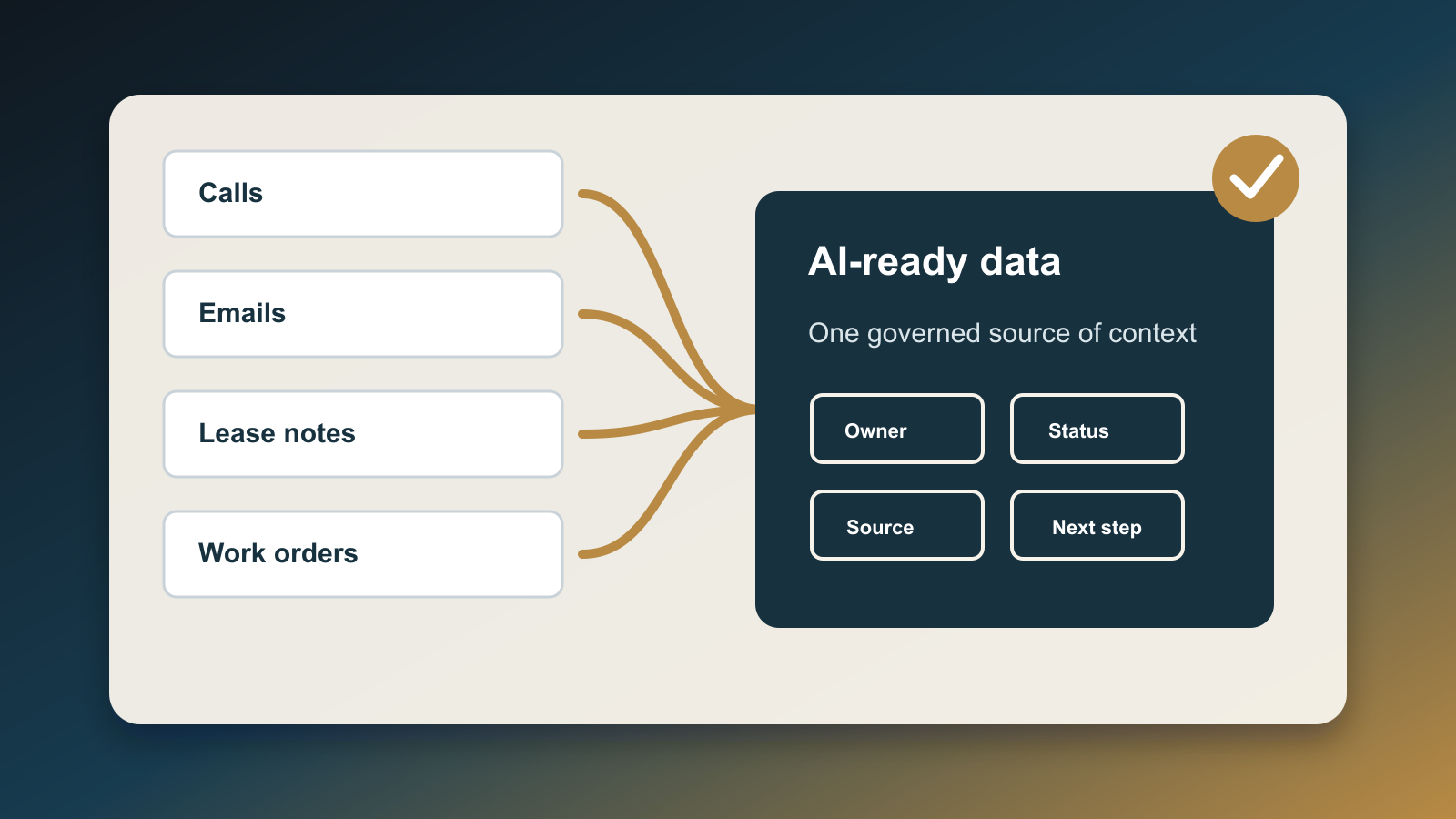
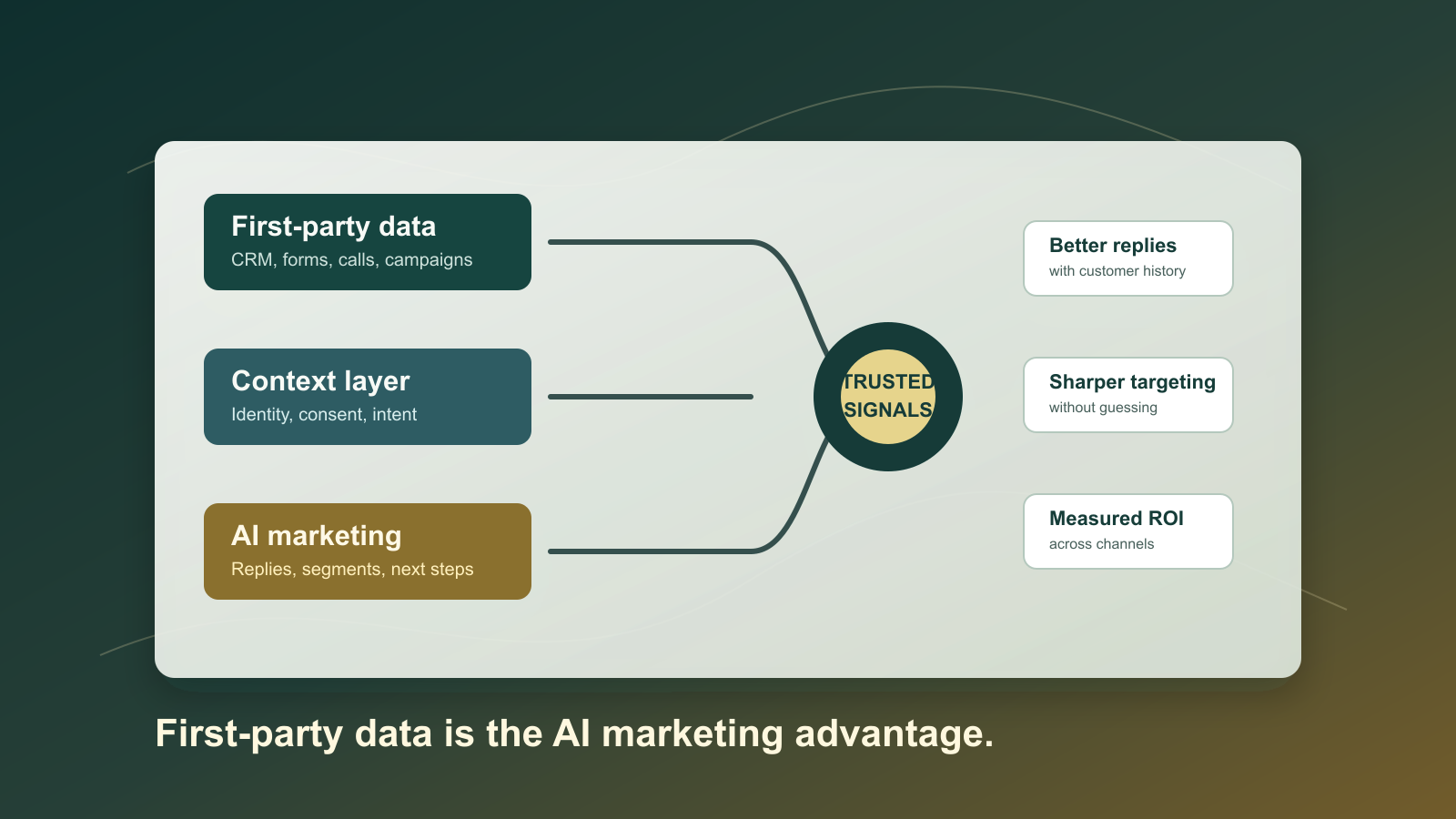
- Data Layer – CRM, project data, docs, and customer context
- Decision Layer – prompts, playbooks, routing rules, and approval thresholds
- Execution Layer – automations, agents, and human-in-the-loop checkpoints
- Measurement Layer – KPIs, QA scorecards, and feedback loops
When these layers are connected, teams move faster without sacrificing quality.
Where Teams See Immediate ROI
Across professional services and real-estate-adjacent operations, the fastest wins usually come from:
- Lead response workflows with AI-assisted qualification
- Proposal and content generation tied to approved brand voice
- SOP automation for repetitive back-office tasks
- Reporting pipelines that convert raw data into executive summaries
If you need practical implementation support, see our AI strategy services and implementation approach.
Governance Is the Multiplier
The highest-performing teams do not just automate—they govern.
Use a lightweight governance model inspired by frameworks like NIST AI RMF:
- Define risk levels for each workflow
- Require human review where impact is high
- Version prompts and automations like code
- Track error rates and correction cycles
This is how you scale safely while keeping trust high.
The 90-Day Implementation Blueprint
You do not need a massive transformation program. Start in focused cycles:
Days 1–30: Audit and Prioritize
- Map workflows end-to-end
- Identify high-friction, high-volume tasks
- Pick 2–3 pilot workflows
Days 31–60: Build and Deploy
- Create production prompts and automation logic
- Add QA checkpoints
- Train team owners on the new workflow
Days 61–90: Measure and Expand
- Compare cycle time, cost, and quality against baseline
- Keep what works, remove what does not
- Expand to adjacent workflows
For an example of operational AI design in practice, read: AI Agents in Real Estate Operations.
Common Mistakes to Avoid
- Buying tools before mapping workflows
- Skipping ownership and governance
- Over-automating low-value tasks first
- No feedback loop into prompt/system updates
Avoid these, and AI becomes a durable capability—not a temporary experiment.
Final Takeaway
AI in business is no longer about individual productivity hacks. It is about operating model design.
The companies that win in 2026 will be the ones that redesign how work gets done—combining AI speed, human judgment, and clear accountability.
FAQ
What does "AI operating system" mean for a business?
It means embedding AI into repeatable workflows, decision rules, and measurement loops across teams—rather than using AI only for isolated tasks.
How long does it take to see ROI from AI operations?
Most teams can show measurable gains within 60–90 days when they focus on high-volume workflows and track baseline vs. post-implementation performance.
Do small teams need enterprise AI infrastructure?
No. Small teams can start with existing tools plus clear playbooks, automation triggers, and governance checkpoints.
How do you reduce risk while scaling AI?
Use human-in-the-loop approvals for high-impact outputs, version prompts, monitor error rates, and apply a lightweight risk framework.

Written by
Ben Laube
AI Implementation Strategist & Real Estate Tech Expert
Ben Laube helps real estate professionals and businesses harness the power of AI to scale operations, increase productivity, and build intelligent systems. With deep expertise in AI implementation, automation, and real estate technology, Ben delivers practical strategies that drive measurable results.
View full profile