#Workflow Automation
Insights tagged with Workflow Automation — AI, real estate, and business innovation from Ben Laube.
View all insights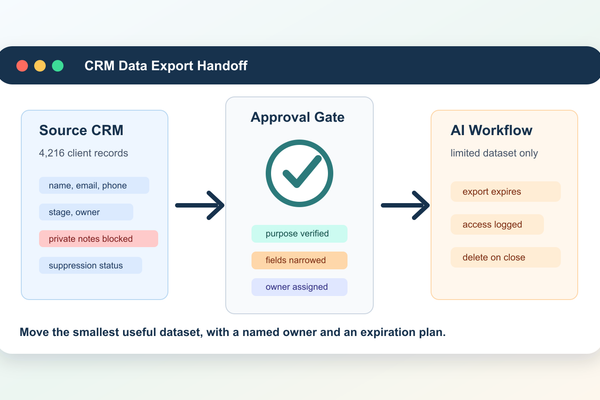
Build a Data Export Handoff Before AI Moves CRM Records
Real estate teams need a CRM data-export approval step before AI syncs, enriches, or moves client records into new tools.
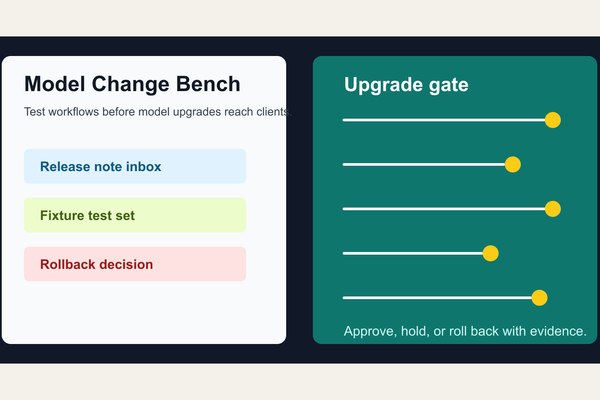
Build a Model Change Bench Before AI Upgrades Your Workflows
AI models change faster than business workflows. A model-change bench gives teams release-note tracking, test fixtures, approval gates, and rollback evidence before upgrades affect clients or CRM data.
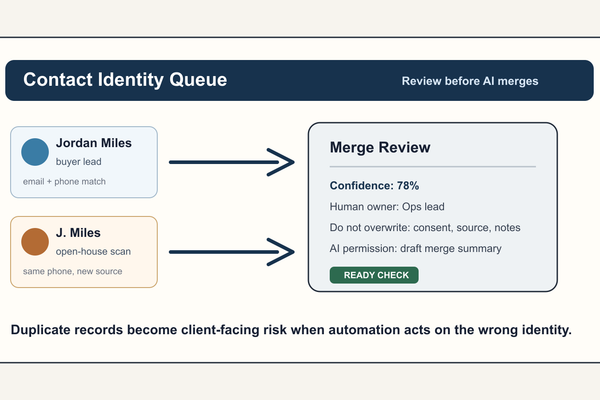
Build a Contact Identity Queue Before AI Merges Your CRM
AI deduplication can clean a CRM or quietly break client trust. A contact identity queue keeps source history, consent, households, and human approval visible before records merge.
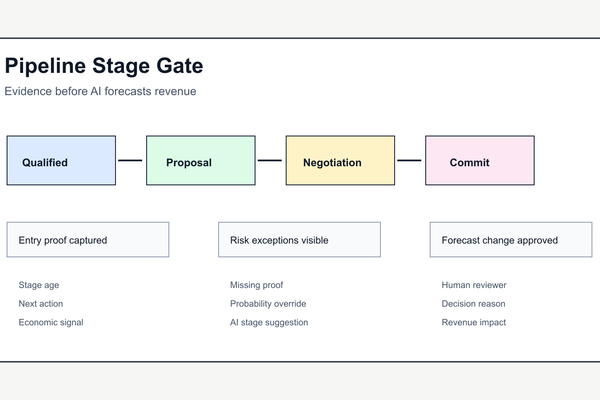
Build a Pipeline Stage Gate Before AI Forecasts Revenue
AI can forecast from CRM data, but teams need a pipeline stage gate first so revenue predictions are based on verified evidence instead of loose labels.
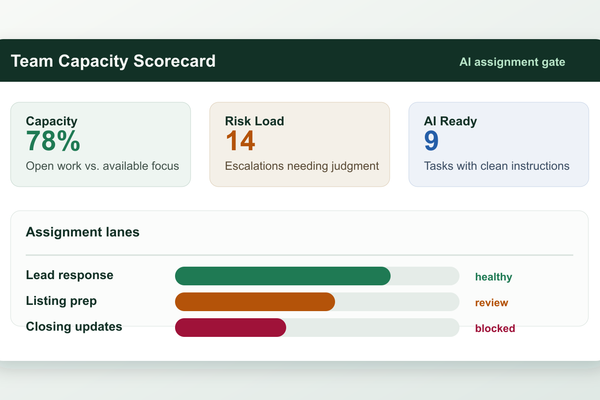
Build a Team Capacity Scorecard Before AI Assigns Work
AI can route real estate work quickly, but teams need a capacity scorecard first so assignments reflect workload, risk, missing inputs, and human accountability instead of simple round-robin rules.

Ask AI Vendors for Workflow Proof, Not Another Demo
AI demos are easy to polish. Real estate teams should ask vendors to prove the workflow with CRM writes, permissions, exceptions, audit trails, and business outcomes before buying.
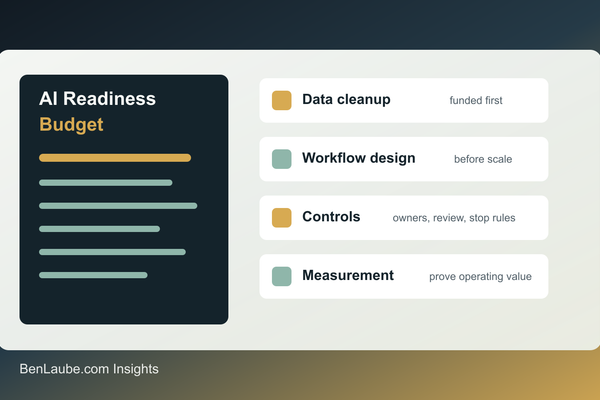
Put AI Readiness in the Real Estate Budget
AI tools are spreading faster than the operating work needed to support them. Real estate teams should budget for data cleanup, workflow design, controls, training, and measurement before automation scales.

AI in Business: Why 2026 Is an Operating System Shift, Not a Tool Upgrade
AI is no longer just a productivity add-on. In 2026, leading teams are redesigning workflows, decisions, and accountability around AI as a business operating system.