Build a Home Warranty Service Queue Before AI Promises Help
Post-close service is becoming an AI use case because the work is repetitive, urgent, and relationship-sensitive. A client texts that the dishwasher stopped working. Another says the air conditioning failed two weeks after closing. A buyer cannot remember whether the warranty company, builder, appliance manufacturer, seller, agent, or service contractor should be contacted first. AI can summarize the issue, draft the reply, pull the closing notes, and suggest the next step.
That is useful, but it is also where teams can overpromise. A friendly AI reply can accidentally say the repair is covered, the vendor will arrive soon, the claim is already open, or the team will handle the dispute. If the contract does not support that promise, the client experience gets worse, not better.
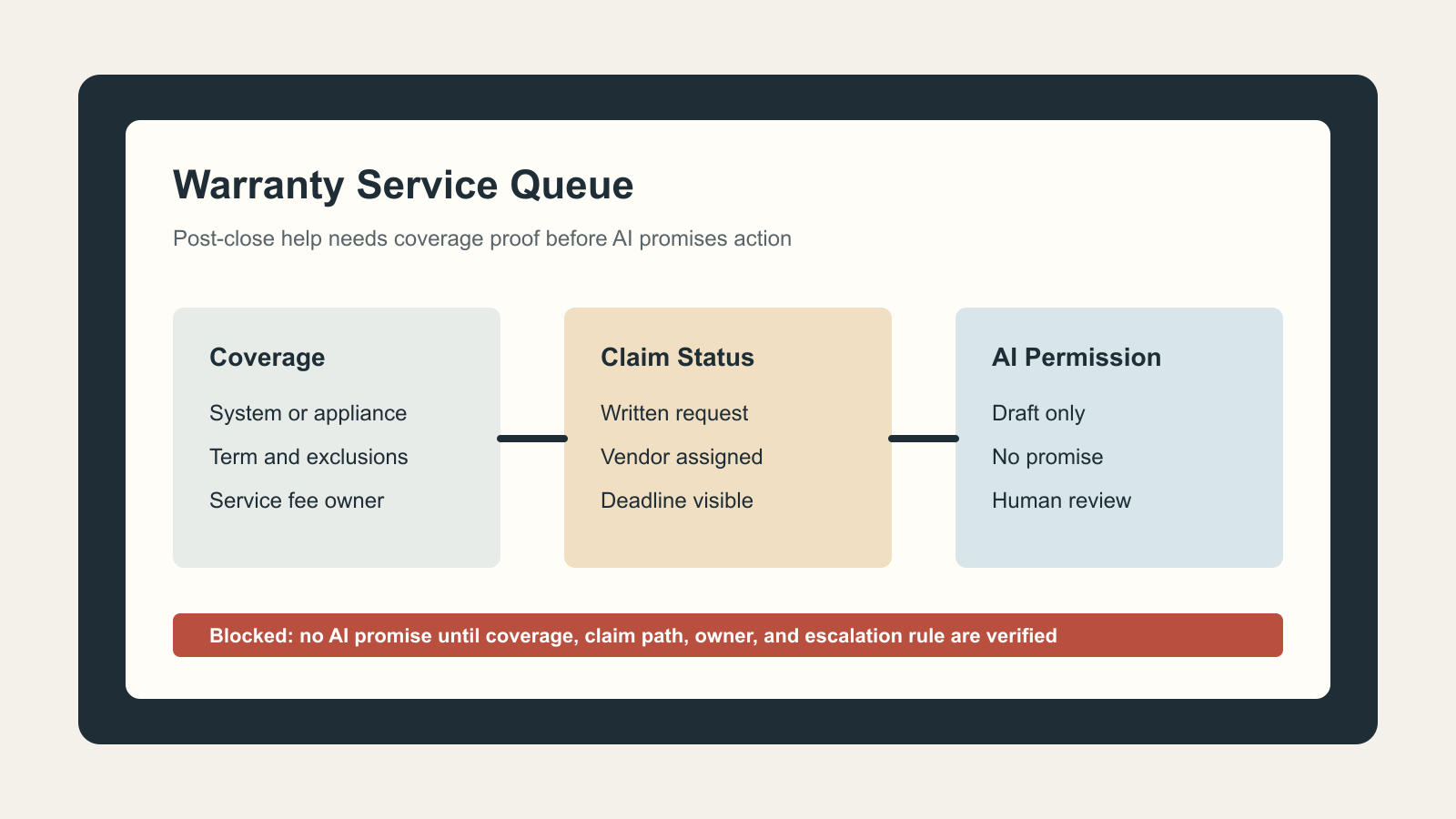
The fix is a home warranty service queue: a small operating layer that verifies coverage, claim path, owner, deadline, and escalation rules before AI sends post-close help.
Why this needs a queue now
The Federal Trade Commission draws an important distinction for consumers: a home warranty is usually a service contract, costs extra, and is not the same as a builder warranty. The FTC also warns that service contracts may duplicate existing coverage, cover only part of the item, or make it hard to get repairs when needed. That is not a detail AI should improvise.
New-construction coverage has its own structure. FTC guidance on new-home warranties explains that builder warranties typically cover workmanship and materials for specific components and often have different time windows for different systems. It also tells consumers to check coverage, file claims according to the warranty instructions, put repair requests in writing, and keep records of communications.
Those details matter in real estate operations because post-close help is a trust moment. The client is not asking for a generic article about warranties. They are asking whether this specific problem, in this specific home, under this specific agreement, has a path to resolution.
AI can help with speed, but the queue has to protect accuracy.
Start with the coverage record
Most post-close service breakdowns happen because coverage details are scattered. The warranty PDF is in the transaction file. The receipt is in an email. The seller concession is in the closing package. The builder contact is in a text thread. The service fee is on the warranty provider portal. The client remembers a verbal promise that may not be written anywhere.
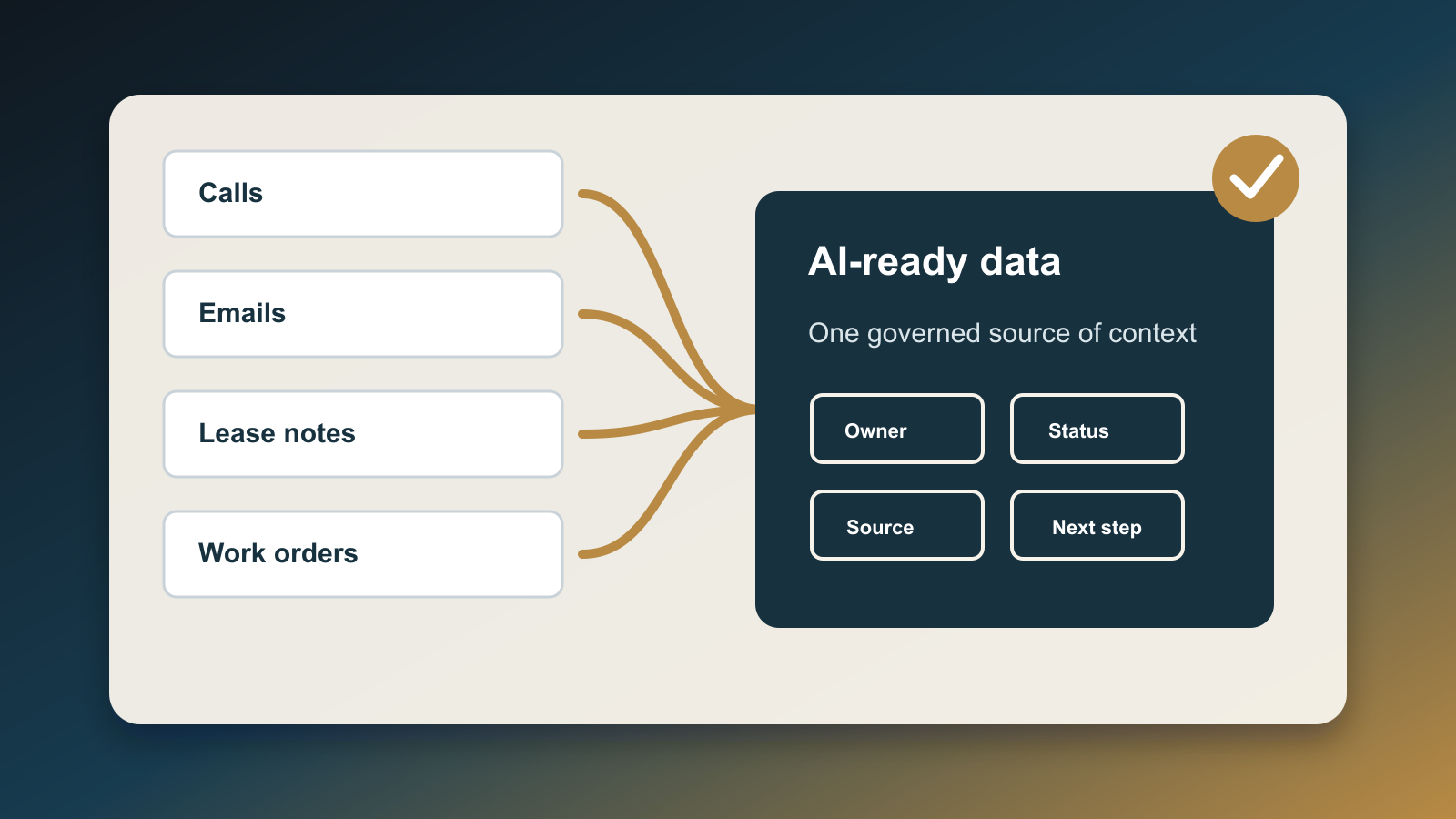
A service queue should convert those fragments into a coverage record before automation replies. The record should include:
- Warranty or service-contract provider.
- Contract number, policy number, or claim portal link.
- Coverage start and end dates.
- Covered systems and appliances.
- Known exclusions and service fees.
- Required claim method.
- Proof of purchase, closing document, or registration status.
- Client responsibility and team responsibility.
- Escalation contact.
- AI permission status.
That final field matters. AI should know whether it can answer directly, draft a reply for review, ask for missing information, or stay silent until a human checks the agreement.
Separate warranty, service contract, and goodwill
A client usually does not care about the legal category. They want the problem fixed. But the team has to classify the request before AI speaks.
Use three lanes.
The first lane is warranty coverage. This is for builder warranties, manufacturer warranties, or written warranties tied to a product or construction component. The question is whether the defect, timeline, owner, and repair method match the written coverage.
The second lane is service-contract coverage. This is for home warranty plans and extended service contracts. The question is whether the item is covered, whether the contract excludes the condition, whether the claim process has been followed, and whether the client owes a service fee or deductible.
The third lane is goodwill support. This is where the agent or team may help coordinate, introduce a vendor, explain a next step, or make a relationship-saving gesture even when the issue is not covered. This lane needs extra care because AI should not turn goodwill into a binding promise.
The queue should make the lane visible before any client-facing message goes out.
Make AI ask for missing proof
The safest first AI action is often not an answer. It is a structured information request.
If the queue is missing the contract number, AI can ask the client for the plan document or claim portal email. If the issue may be a manufacturer warranty, AI can ask for the model number, purchase date, and receipt. If the issue may be builder-related, AI can ask for the closing date, photos, and written description of the defect. If the repair is urgent or safety-related, AI should route to a human instead of trying to reason through coverage.
This is where the queue reduces workload without creating false certainty. AI can collect clean inputs, label the request, and draft the next internal task. It does not need to decide coverage before the evidence exists.
Control the words AI can use
Post-close service language should have permission levels.
Level one is acknowledgement: "I received this and will help get the right next step identified." AI can usually draft that.
Level two is information request: "Please send the warranty plan, claim email, appliance model, and a photo of the issue." AI can draft that when the required fields are missing.
Level three is process guidance: "The plan appears to require a claim through the provider portal before a vendor is assigned." AI can draft that only when the coverage record supports it.
Level four is coverage language: "This item appears to be covered." AI should not send that without human approval and a source citation.
Level five is commitment language: "We will get this repaired" or "the warranty company will pay." AI should treat that as blocked unless a human owner explicitly approves it.
This permission model keeps helpful automation from becoming unauthorized representation.
Connect the queue to post-close follow-up
The service queue should not live only inside the admin team. It should connect to the CRM's post-close workflow.
When a client reports a problem, the system should create a service item, attach the coverage record, assign an owner, and classify urgency. AI can summarize the issue, extract dates, draft the client acknowledgement, and identify missing proof. If the item is covered and the claim path is clear, AI can prepare a portal checklist or email draft. If coverage is unclear, it routes to review. If the issue is outside coverage, AI can draft a careful explanation and suggest approved next steps.
This also improves future service. Each resolved item teaches the team which providers respond quickly, which claims get denied, which systems create repeat issues, and which buyer education should happen before closing.
Use current AI trust signals as the standard
Clients increasingly expect AI to appear in housing workflows, but they still want verification. Cotality reported in April 2026 that 75% of buyers assume AI plays a role in homebuying, while 44% would pay for a human expert to verify AI-generated housing decisions. That is exactly the posture a post-close service system should take: AI speeds up intake and drafting, while humans verify commitments.
Agents are thinking the same way. A February 2026 RPR survey covered by NAR found that accuracy was the top AI concern among agents surveyed. A warranty queue turns that concern into workflow design. It gives AI clean facts, blocks unsupported promises, and makes the owner visible.
What to build first
Start with the next ten post-close service requests. Do not redesign the entire CRM. For each request, record the coverage type, provider, contract location, claim method, missing proof, owner, client message status, and final outcome. Add a simple AI permission field: intake only, draft only, approved guidance, or blocked.
Then connect one automation: when a new service request arrives, AI creates the service item, extracts obvious fields, identifies missing proof, and drafts a short acknowledgement. It should not state coverage, timeline, payment responsibility, or vendor availability until the queue says those fields are verified.
That is enough to change the client experience. The team replies faster, keeps better records, avoids accidental promises, and learns which post-close problems need better handoff before closing.
AI can make post-close service feel more responsive. The home warranty service queue makes sure it stays accurate.

Written by
Ben Laube
AI Implementation Strategist & Real Estate Tech Expert
Ben Laube helps real estate professionals and businesses harness the power of AI to scale operations, increase productivity, and build intelligent systems. With deep expertise in AI implementation, automation, and real estate technology, Ben delivers practical strategies that drive measurable results.
View full profile