Build a Service-to-Referral Loop Before AI Handles Clients
AI is pushing customer service into the same operating conversation as sales and marketing. That matters for real estate because the client relationship does not end when a showing is booked, a listing goes live, or a closing date is set. The work after the first conversion is where trust is either compounded into repeat business and referrals or quietly lost inside disconnected inboxes, support notes, transaction checklists, and CRM tasks.
The current research points in the same direction. Gartner reported on April 28, 2026 that 85% of customer service and support leaders are expanding human agent responsibilities as AI reduces contact volume and shifts simple work away from people. Gartner also noted that customers still trust human agents more than AI for product or service recommendations in high-context moments. Salesforce's 2026 customer service research says 79% of service leaders view AI agent investment as critical, while service organizations expect AI agents to reduce service expenses and case resolution times by roughly 20%.
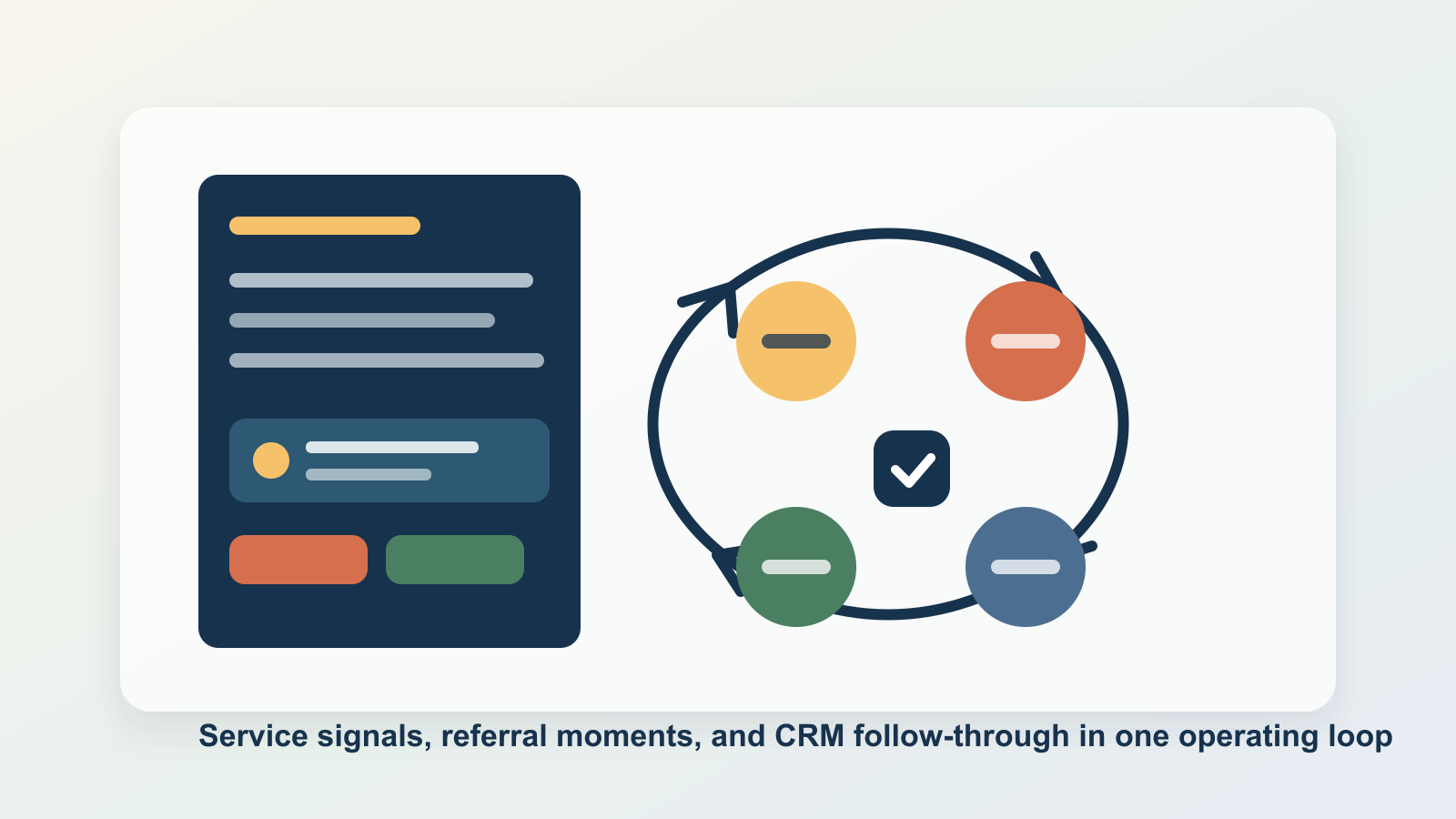
Those numbers are useful, but they can lead teams to the wrong first project. The first project should not be "let AI answer more messages." The first project should be a service-to-referral loop: a repeatable way to capture service moments, classify relationship signals, assign human follow-through, and turn satisfied clients into future conversations without making the experience feel mined for referrals.
Why service is becoming a growth system
Real estate already runs on relationship proof. NAR's 2025 Profile of Home Buyers and Sellers says 88% of buyers purchased through an agent or broker, and 91% of sellers used a real estate agent. The same NAR summary says sellers placed high priority on marketing the home, pricing it competitively, and selling within a specific timeframe. Those are service expectations, not just sales promises.
NAR's REALTOR Technology Survey adds the operating angle. REALTORS said they adopt technology primarily to save time and improve the client experience. Social media remained the top lead-generating technology, followed by CRM and local MLS. That combination creates a practical tension: teams are buying tools to move faster, but the relationship signals that create referrals often appear in places the CRM does not treat as pipeline data.
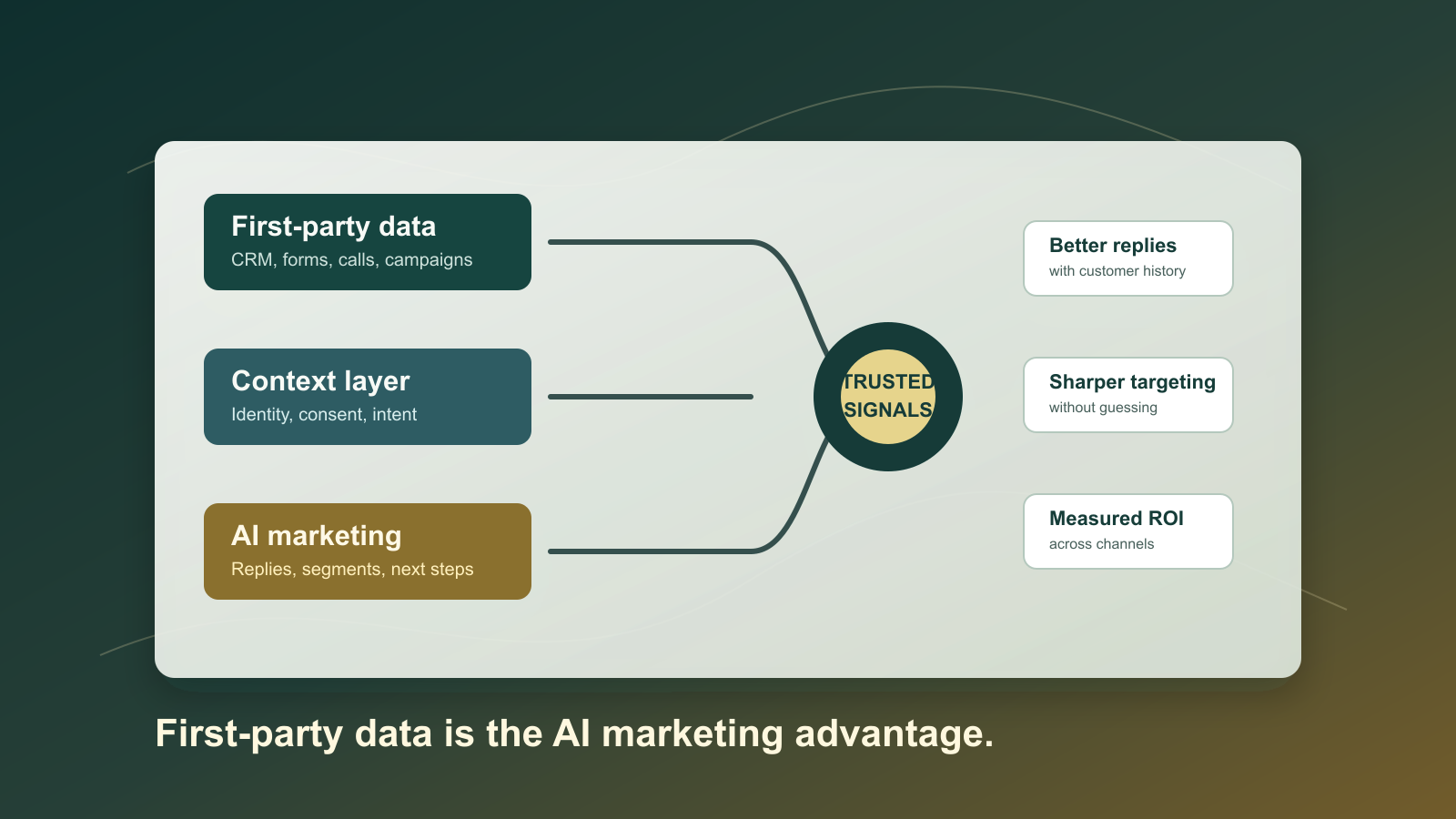
A buyer who praises the agent after a difficult inspection is giving a relationship signal. A seller who asks whether a neighbor should talk to the team is giving a referral signal. A past client who replies to a market update with a renovation question is giving a retention signal. If those moments stay as text-message fragments or memory in one agent's head, AI cannot help. Worse, AI may automate generic check-ins while the highest-value follow-up is never assigned.
What the loop should capture
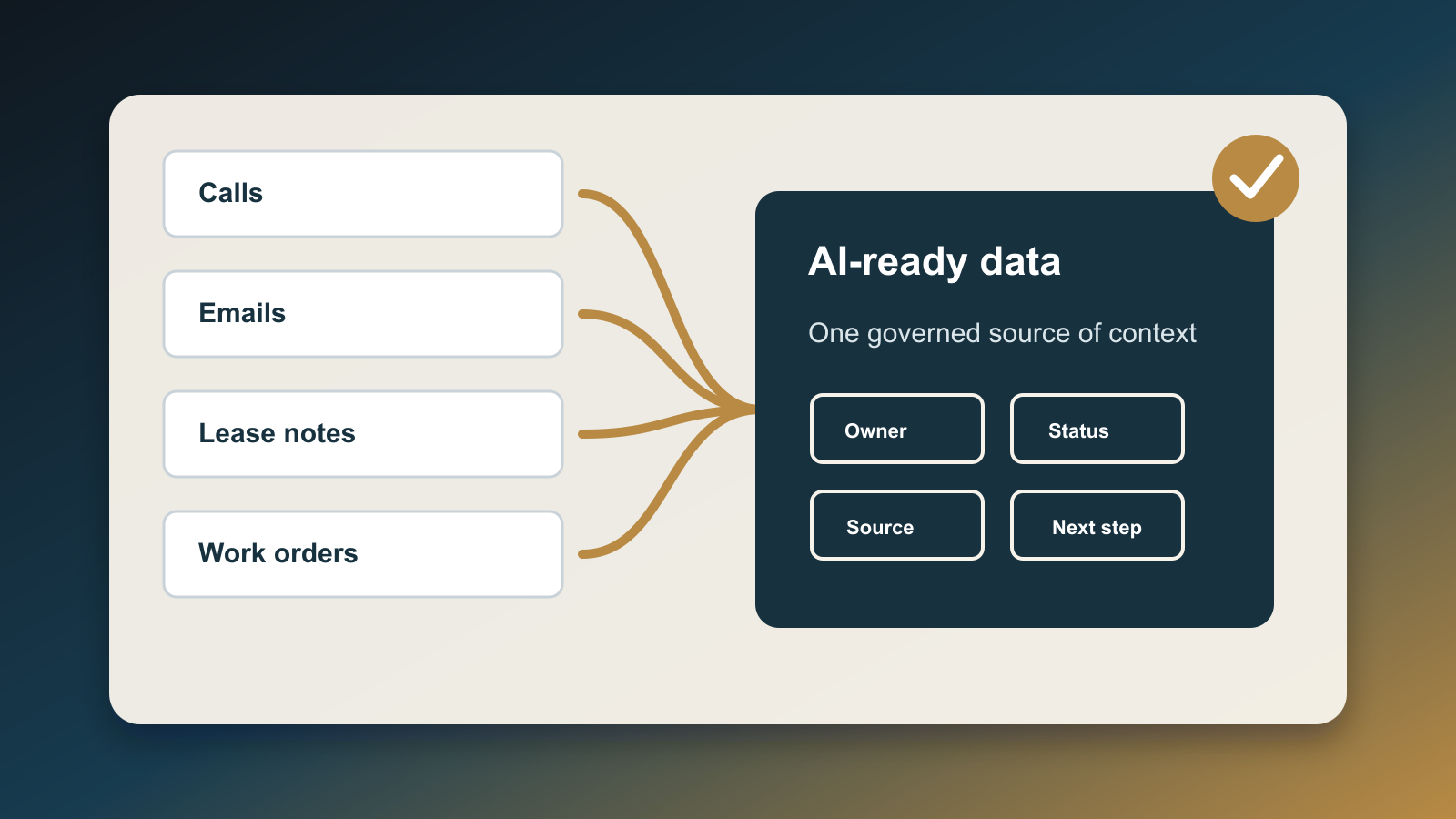
A service-to-referral loop needs fewer fields than a full customer data platform, but the fields have to be enforced. Every meaningful client interaction should be able to record the contact, transaction or lifecycle stage, service issue, sentiment, urgency, next human action, promised follow-up date, referral cue, repeat-business cue, and source of the signal. The goal is not surveillance. The goal is continuity.
The loop should also distinguish service recovery from relationship expansion. A missed deadline, confusing lender update, appraisal issue, or post-closing repair question should trigger resolution before any marketing automation touches the client. A satisfied update, successful milestone, unsolicited praise, or explicit introduction should trigger a different path: thank, document, ask permission, and make it easy for the client to introduce someone without scripting them into an awkward campaign.
That distinction matters because AI service tools are good at compressing response time, but response time is not the same as relationship quality. A fast answer to the wrong moment can damage trust. A slower but well-owned human follow-up after a stressful issue can create the memory that later becomes a recommendation.
The operating design
Start with one shared queue called Relationship Signals. It should accept inputs from CRM notes, post-appointment forms, transaction milestones, call summaries, email replies, and simple manual entries. Each signal gets a type: service recovery, education need, referral cue, repeat-business cue, testimonial opportunity, vendor need, or life-event change.
Then define ownership. Service recovery belongs to the person accountable for resolving the issue. Education needs belong to the advisor who can clarify the next decision. Referral cues and testimonial opportunities should move to a relationship owner, not a generic marketing sequence. Life-event changes should update segmentation and future relevance, but they should not automatically trigger sensitive outreach unless the client has invited the conversation.
Finally, make the loop measurable. Track time to acknowledge, time to resolve, number of recovered issues, number of referral cues captured, number of permission-based introductions, repeat-client conversations opened, and content gaps discovered from recurring questions. Do not make the first metric "referrals requested." That will train the team to extract value before earning it.
Where AI fits
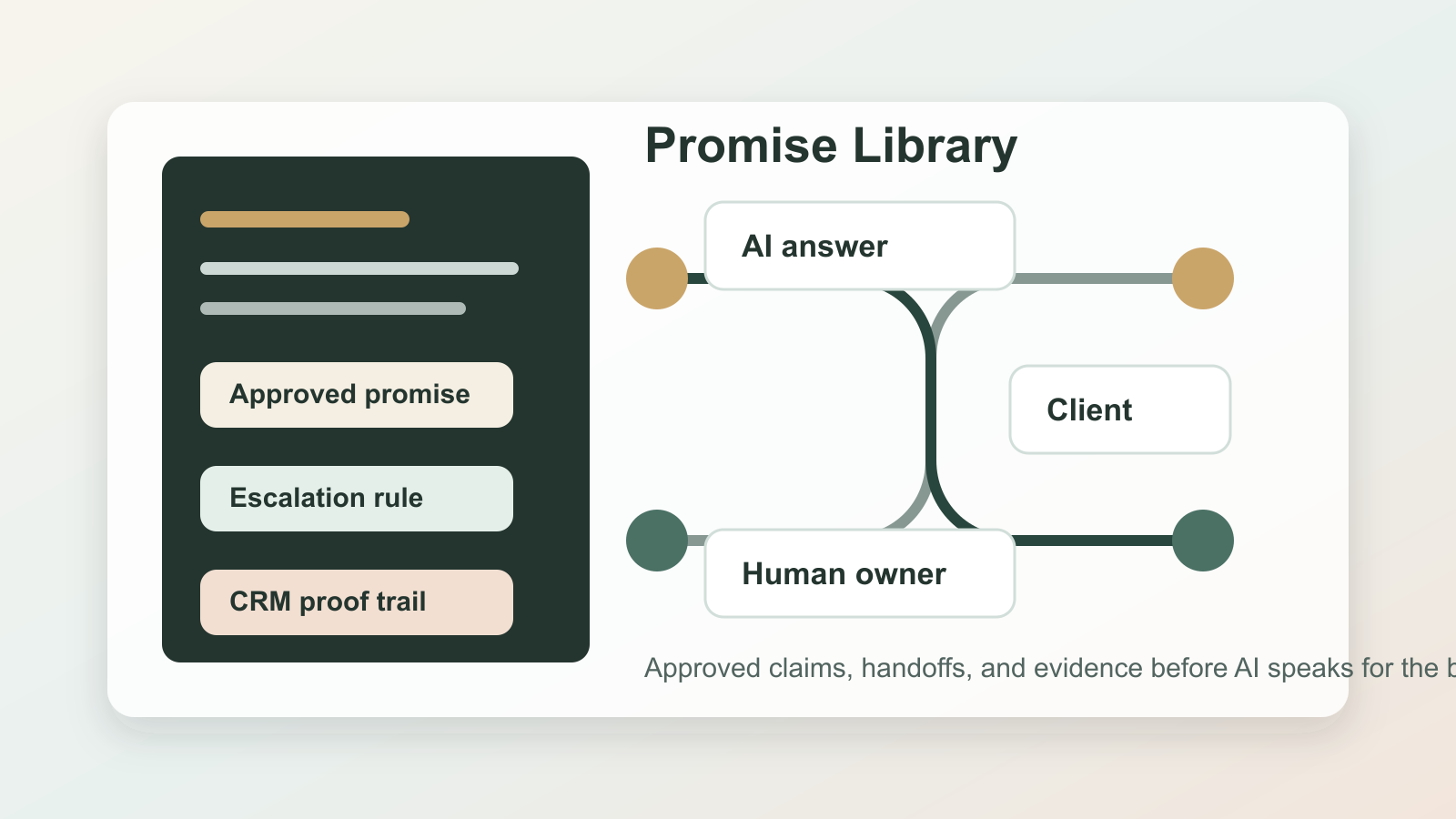
AI should support the loop by summarizing interactions, detecting likely signal types, suggesting next actions, drafting human-reviewed follow-up, and surfacing stale promises. It should not be allowed to decide that every positive interaction deserves a referral ask. It should not message a past client about a sensitive life event just because a note contains a keyword. It should not overwrite the relationship owner's judgment.
A useful starting policy is simple: AI may classify and draft, but a person approves anything involving service recovery, referrals, testimonials, pricing advice, financing context, family status, relocation, or other sensitive circumstances. That keeps the system fast without turning the client relationship into an automated extraction machine.
A 30-day build plan
In week one, audit the last 50 client conversations and tag the moments where a relationship signal appeared. Do not change tools yet. The objective is to learn where signals already exist and where they disappear.
In week two, add the minimal CRM fields and create the Relationship Signals queue. Make the fields easy enough for an agent or coordinator to complete in under one minute. If the system requires a long form, it will fail.
In week three, connect the loop to two workflows: post-milestone follow-up and service recovery. A milestone might be offer accepted, inspection completed, appraisal cleared, clear to close, listing launched, price adjustment, or closing anniversary. A service recovery item should include owner, deadline, client-facing update, and final resolution note.
In week four, add AI only where it reduces administrative drag. Let it summarize a call, identify likely sentiment, suggest a task, or draft a follow-up. Keep human approval in the path. Review the queue weekly and ask one question: which client moments would we have missed without this system?
The real payoff
The payoff is not just more referrals. The payoff is a business that remembers what clients experienced. When AI takes over routine service work, teams can either pocket the saved time or redeploy it into the moments that create trust. Gartner's latest service research suggests many leaders are choosing workforce redesign instead of simple headcount reduction. Real estate teams should make the same choice at a smaller scale.
A service-to-referral loop turns that choice into operating discipline. It gives AI better context, gives people better prompts for judgment, and gives clients a more consistent experience. Before the business asks AI to handle more clients, it should make sure the system can recognize when a client has just handed it the next relationship opportunity.

Written by
Ben Laube
AI Implementation Strategist & Real Estate Tech Expert
Ben Laube helps real estate professionals and businesses harness the power of AI to scale operations, increase productivity, and build intelligent systems. With deep expertise in AI implementation, automation, and real estate technology, Ben delivers practical strategies that drive measurable results.
View full profile