AI Is Rewriting Real Estate Service Roles
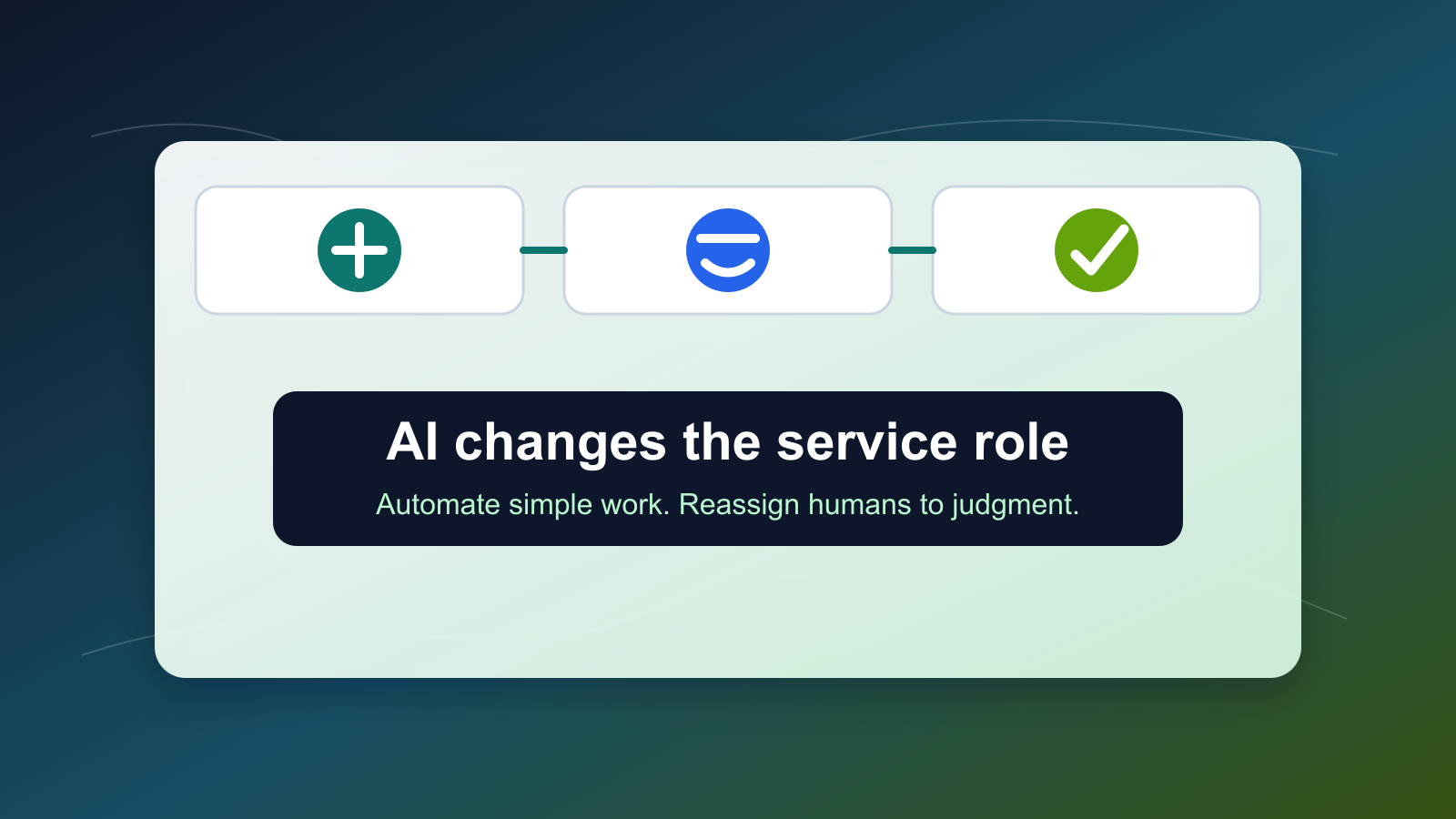
The next serious AI decision for a real estate business is not which chatbot to buy. It is what the human service role becomes after the simple work starts moving faster.
That distinction matters because the market is already moving past novelty. In an April 2026 Gartner release, 85% of customer service and support leaders said they are adding new tasks and responsibilities to frontline roles as AI reduces contact volume, while only 31% had implemented or planned AI-driven layoffs through early 2027. Gartner's point is blunt: the stronger pattern is workforce redesign, not simple replacement.
Real estate teams should read that as an operations warning. If AI is only used to draft replies, summarize calls, and answer routine questions, it may lower busywork without improving the client experience. The advantage comes when the role changes: the coordinator, ISA, agent, transaction manager, or admin stops chasing status updates and starts owning judgment-rich moments that clients actually remember.
Why this is urgent now
Customer expectations are rising at the same time AI capacity is becoming normal. Gartner separately reported in February 2026 that 91% of customer service leaders are under pressure from executives to implement AI. Zendesk's 2026 CX Trends research points in the same direction: customers expect speed, continuity, personalization, and clearer explanations when AI is involved.
Real estate is not exempt from those expectations. Buyers and sellers already move through a blend of portals, lender messages, showing tools, text threads, email, e-signature, inspection reports, title updates, and post-closing questions. NAR's 2025 technology survey found eSignature and social media were already heavily used, 46% of agents reported using AI-generated content, and 82% said clients responded positively to technology in the buying and selling process. That does not mean clients want a colder experience. It means they are comfortable with technology when it removes friction and keeps them better informed.
The risk is that a team automates the shallow layer and leaves the deeper role undefined. A bot can acknowledge an inquiry. A workflow can tag a lead source. A model can summarize a call. But someone still has to decide whether a nervous seller needs a pricing conversation, whether an investor lead is wasting time, whether a transaction delay requires proactive escalation, or whether a buyer is using the wrong affordability assumption. Those are not just tasks. They are role boundaries.
The old job description breaks
Many real estate service roles were built around message handling. Check the inbox. Update the CRM. Send the next follow-up. Remind the agent. Ask the lender. Push the title company. Confirm the showing. Log the note.
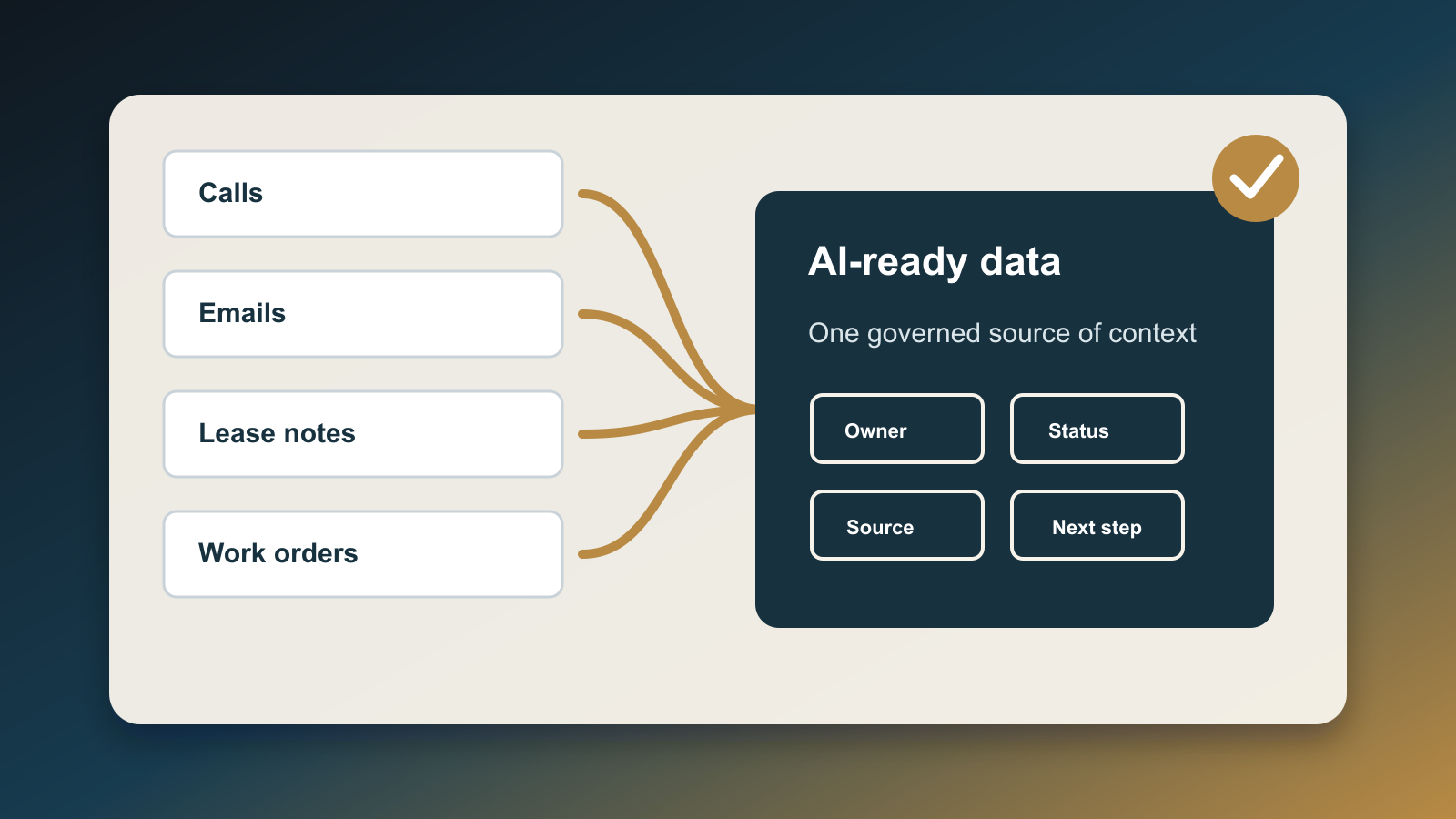
AI weakens that job design because it can absorb pieces of the relay work. Salesforce's 2026 State of Sales research says sales teams are leaning into AI agents to reduce research and drafting time, and it frames administrative bottlenecks as a major productivity drag. In real estate, the same pattern shows up as scattered notes, untouched leads, unlogged calls, delayed response routing, and staff time spent moving information instead of interpreting it.
When AI removes part of that relay work, a manager has two choices. The weak choice is to celebrate fewer touches and hope the same people naturally move to higher-value work. The stronger choice is to rewrite the job description around outcomes.
A role that used to say "respond to new inquiries" should become "classify inbound intent, confirm urgency, and escalate the cases where timing or trust changes the outcome." A role that used to say "update the CRM" should become "maintain decision-ready client context, including next action, owner, risk, and proof." A role that used to say "send follow-up" should become "decide which clients need automation, which need a personal call, and which need a different offer."
That is the real AI operating model: software handles repetitive movement; humans own judgment, trust, exception handling, and improvement of the system.
Build the role around four new responsibilities
The first responsibility is exception ownership. Every automated workflow needs a clear definition of what counts as normal and what must leave the queue. Examples include a lead with conflicting timeline signals, a seller asking about price reduction, a buyer who stops responding after a financing question, or a transaction milestone that slips. AI can surface these patterns, but a person should own the decision path.
The second responsibility is context stewardship. HubSpot's April 2026 product announcement centered on a useful idea for go-to-market teams: AI performs better when it understands business context, not just raw data. For a real estate team, context means more than fields in a CRM. It includes how the lead found you, what they are worried about, who has spoken with them, what was promised, what has changed, and what the next human decision should be.
The third responsibility is transparency. Zendesk's 2026 CX Trends release says customers increasingly expect explanations for AI-made decisions and want support experiences to pick up where the last interaction ended. In practice, this means teams should not hide automation behind vague process language. If an AI summary, score, or routing rule affects a client interaction, the team should be able to explain the human-approved rule behind it. "The system flagged this because your timeline changed" is stronger than "the CRM told us to follow up."
The fourth responsibility is system improvement. The best staff member in an AI-supported operation is not just the person who clears the queue. It is the person who notices that the queue is producing the wrong work. They spot repeated misroutes, missing tags, broken handoffs, weak scripts, and confusing automation branches. Then they improve the operating system so tomorrow's work is cleaner.
A practical redesign for a small real estate team
Start with one role, not the whole org chart. Pick the person who handles the most inbound ambiguity: new lead intake, client concierge, transaction coordination, or listing support. Keep their current task list for one week and mark each task as movement, judgment, trust, or improvement.
Movement is repeatable work: log, tag, route, draft, summarize, remind, schedule, and copy information between systems. Judgment is a decision where context changes the answer. Trust is a moment where the client needs confidence, clarity, or reassurance. Improvement is work that makes the system better for the next cycle.
Then set a target: AI should reduce movement work first. Do not begin by automating the moments where judgment and trust carry the most risk. Use AI to prepare the human: summarize the last five interactions, extract unanswered questions, draft a suggested response, flag missing fields, and identify which deals or leads are stuck. The person then approves, edits, escalates, or overrides.
Finally, measure the redesigned role by outcomes instead of activity. Track first meaningful response time, stale lead reduction, unresolved client questions, transaction exceptions caught early, CRM records with a clear next action, and escalations resolved without client confusion. These measures tell you whether AI changed the work or merely added another tool.
The point
AI will not automatically make a real estate team more human. It can just as easily make the business faster at sending average replies. The difference is role design.
The teams that win will not ask, "How many people can AI replace?" They will ask, "Which human responsibilities become more valuable now that software can handle more movement?" In a relationship business, the answer is not less service. It is sharper service: fewer manual relays, clearer context, better exception handling, and more time spent where judgment earns trust.
That is the operational shift. AI does not only change the tools. It changes the job.

Written by
Ben Laube
AI Implementation Strategist & Real Estate Tech Expert
Ben Laube helps real estate professionals and businesses harness the power of AI to scale operations, increase productivity, and build intelligent systems. With deep expertise in AI implementation, automation, and real estate technology, Ben delivers practical strategies that drive measurable results.
View full profile