#Crm
Insights tagged with Crm — AI, real estate, and business innovation from Ben Laube.
View all insights
Build a Short-Term Rental Rule Intake Before AI Advises Investors
Short-term rental advice crosses zoning, platform, tax, building-rule, and fraud-risk boundaries. Give AI a rule intake before it answers investors.
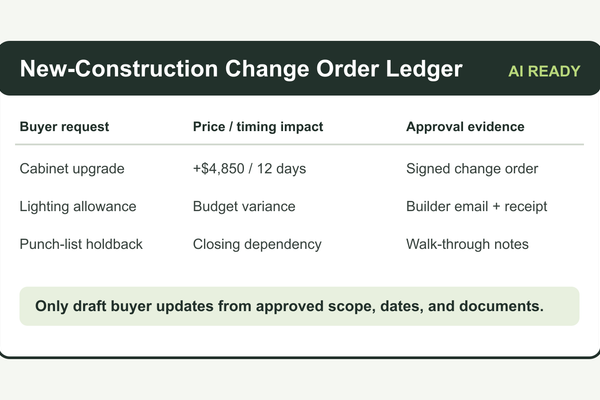
Build a New-Construction Change Order Ledger Before AI Updates Buyers
New-construction buyer updates need approved scope, price, timing, and warranty evidence before AI drafts client-facing language.
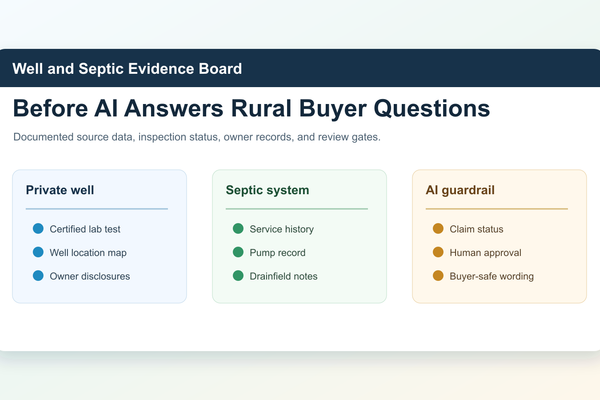
Build a Well and Septic Evidence Board Before AI Answers Rural Buyer Questions
Private wells and septic systems need verified source records before AI drafts buyer updates. A simple evidence board keeps rural-property communication fast, useful, and accountable.
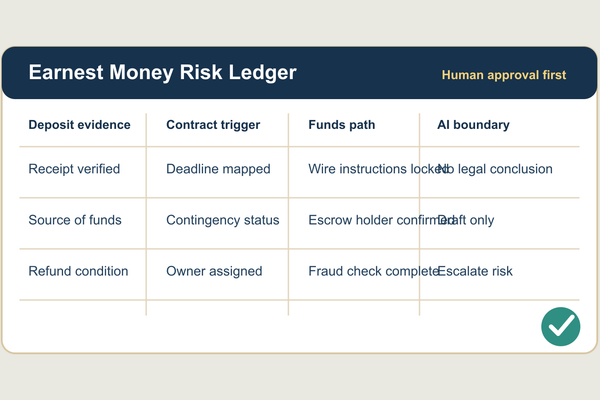
Build an Earnest Money Risk Ledger Before AI Explains Deposits
Earnest money questions are financial, contractual, and fraud-sensitive. Real estate teams need a risk ledger before AI drafts deposit explanations for buyers or sellers.

Build a Client Preference Ledger Before AI Recommends Neighborhoods
AI can rank listings quickly, but real estate teams need a client preference ledger before neighborhood recommendations turn vague buyer language into risky advice.
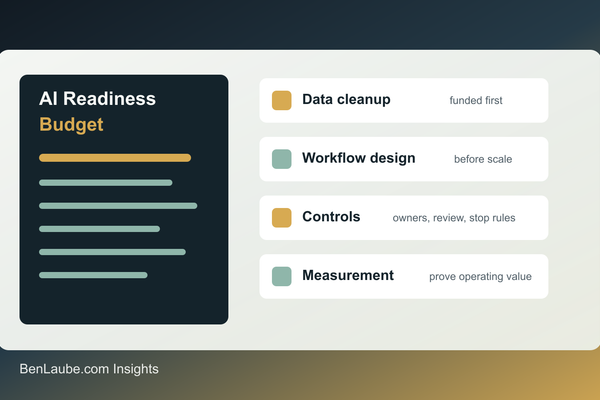
Put AI Readiness in the Real Estate Budget
AI tools are spreading faster than the operating work needed to support them. Real estate teams should budget for data cleanup, workflow design, controls, training, and measurement before automation scales.
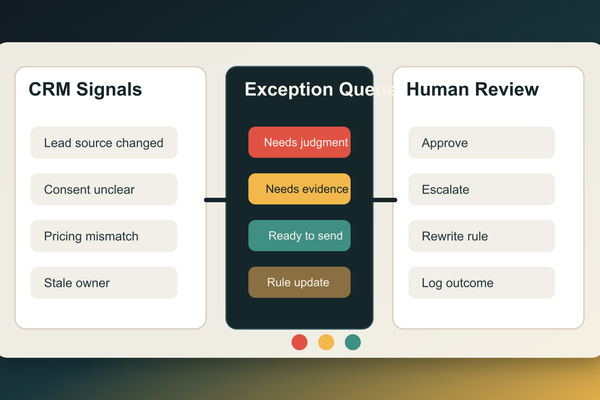
The Exception Queue Is the AI Agent Interface
AI agents should not make every judgment inside the workflow. Real estate teams need exception queues that route risk, capture evidence, and turn edge cases into better operating rules.
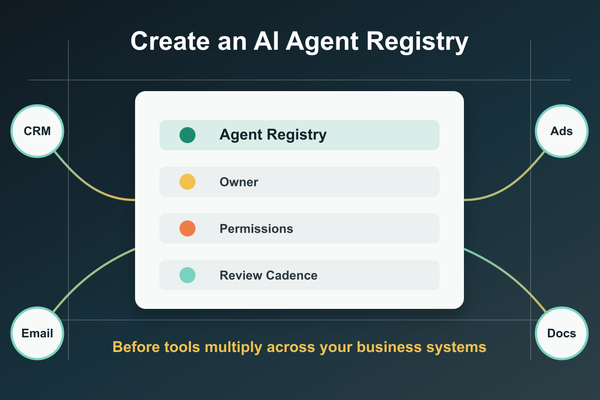
Create an AI Agent Registry Before Tools Multiply
AI agents are spreading through CRMs, email tools, ads, and document workflows. A simple registry gives real estate teams ownership, permission, review, and measurement discipline before automation becomes invisible.
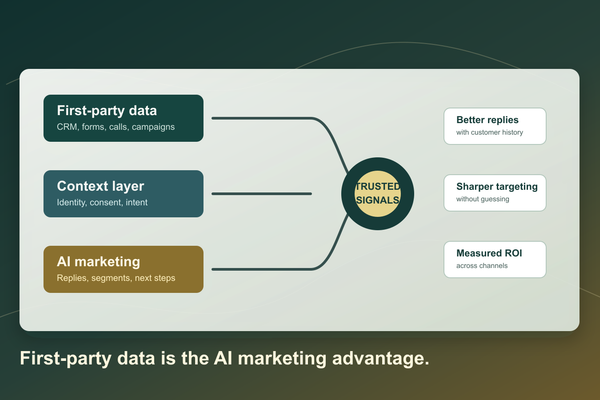
First-Party Data Is the AI Marketing Advantage
AI marketing is no longer scarce. Real estate teams win by connecting CRM, consent, source, and outcome data before adding more agents or campaigns.
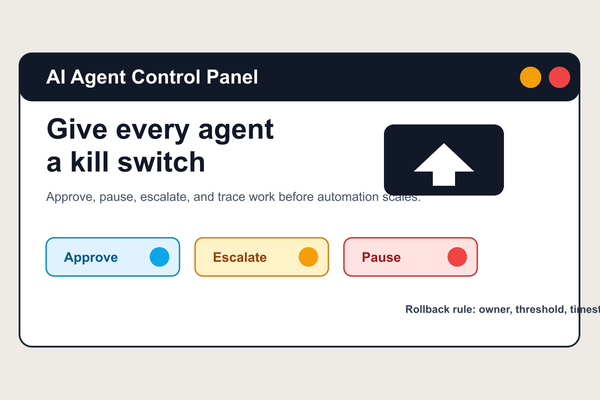
Give Every AI Agent a Kill Switch
Real estate teams should add pause rules, escalation paths, rollout limits, and audit logs before scaling AI agents into client-facing work.
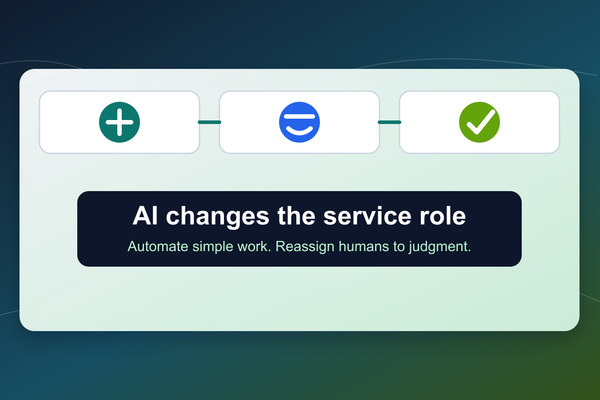
AI Is Rewriting Real Estate Service Roles
AI should not just make real estate teams faster at replying. The practical opportunity is to redesign service roles around judgment, context, exceptions, and client trust.
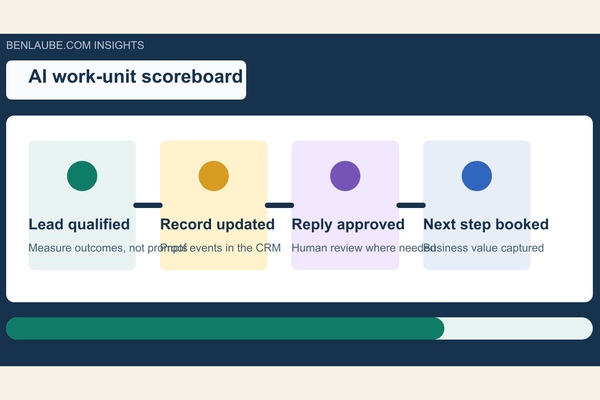
Measure AI Agents by Work Completed, Not Prompts Run
AI agents should be judged by completed business actions with proof in the CRM, not by prompts, drafts, or vague time-saved claims. Build a work-unit scoreboard first.
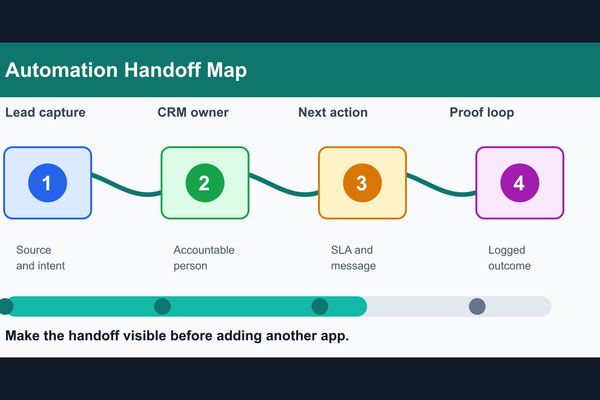
Real Estate Automation Breaks at the Handoff
Most real estate automation does not fail inside the tool. It fails between lead capture, CRM ownership, follow-up, and proof. Build a handoff map before adding another app.

The 7 AI Tools Every Realtor Should Be Using in 2026
Seven AI tools every realtor should use in 2026: CRM and lead management, listing copy, follow-up automation, voice receptionist, content, market intelligence, and all-in-one platforms — with guidance on what to adopt first.

AI Voice Agent Receptionists: Are They Worth It for Real Estate Teams?
Are AI voice receptionists worth it for real estate teams? Speed-to-lead fix, cost, when they’re worth it, what can go wrong, and how to evaluate providers.

How to Automate Follow Up Without Losing the Human Touch
Automate real estate follow-up so no lead falls through the cracks while every touch stays personal: segment, write your own templates, trigger on behavior, cap the sequence, and hand off to a human at the right time.

5 AI Tools Every Real Estate Agent Should Use in 2025
The AI tools that separate high-performing agents from the rest. Discover the 5 essential AI platforms transforming real estate operations in 2025.