#Ai Agents
Insights tagged with Ai Agents — AI, real estate, and business innovation from Ben Laube.
View all insights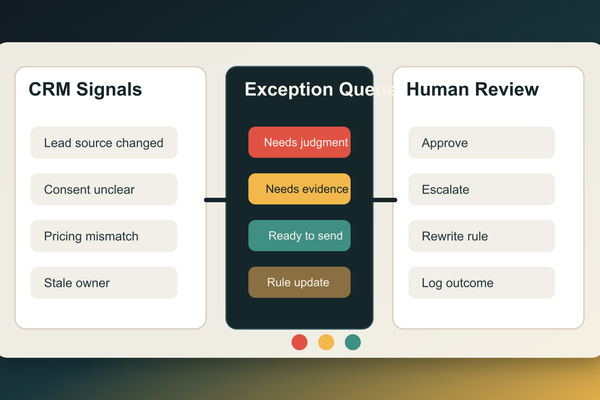
The Exception Queue Is the AI Agent Interface
AI agents should not make every judgment inside the workflow. Real estate teams need exception queues that route risk, capture evidence, and turn edge cases into better operating rules.
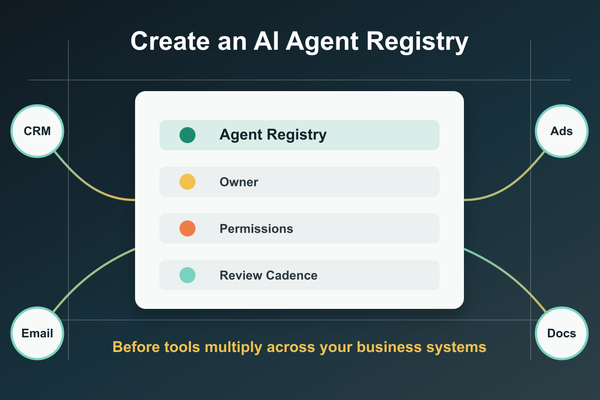
Create an AI Agent Registry Before Tools Multiply
AI agents are spreading through CRMs, email tools, ads, and document workflows. A simple registry gives real estate teams ownership, permission, review, and measurement discipline before automation becomes invisible.
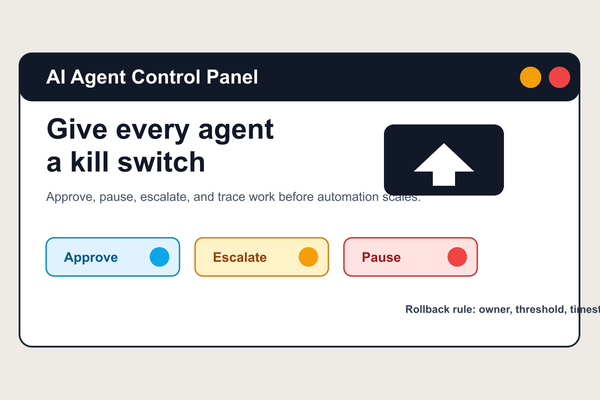
Give Every AI Agent a Kill Switch
Real estate teams should add pause rules, escalation paths, rollout limits, and audit logs before scaling AI agents into client-facing work.
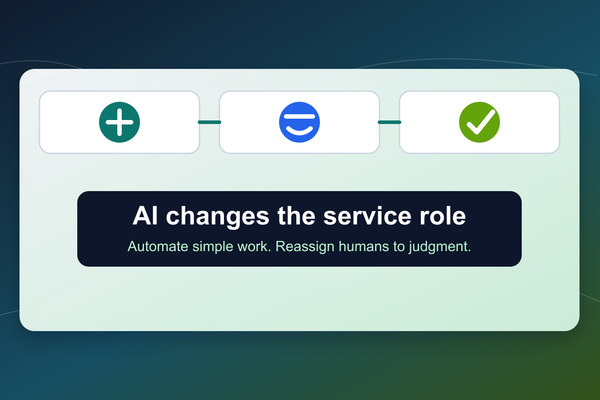
AI Is Rewriting Real Estate Service Roles
AI should not just make real estate teams faster at replying. The practical opportunity is to redesign service roles around judgment, context, exceptions, and client trust.
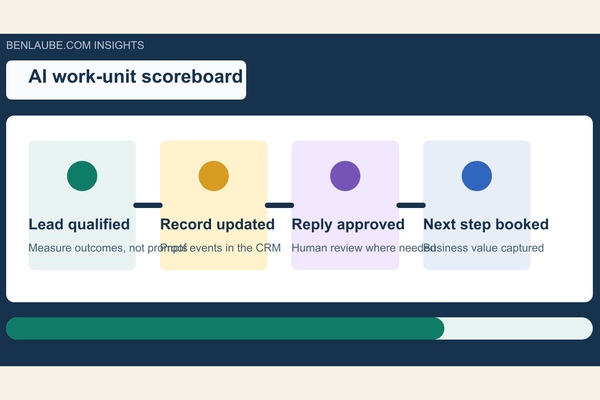
Measure AI Agents by Work Completed, Not Prompts Run
AI agents should be judged by completed business actions with proof in the CRM, not by prompts, drafts, or vague time-saved claims. Build a work-unit scoreboard first.
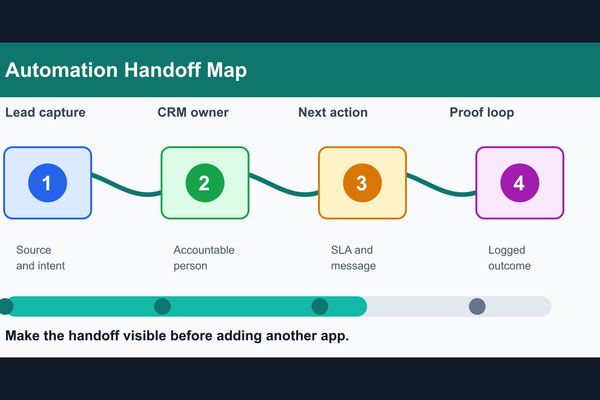
Real Estate Automation Breaks at the Handoff
Most real estate automation does not fail inside the tool. It fails between lead capture, CRM ownership, follow-up, and proof. Build a handoff map before adding another app.

Before You Add AI Agents, Clean Your Real Estate CRM
AI agents only perform as well as the CRM data behind them. Use this practical audit to clean stages, sources, consent, notes, and ownership before automating real estate follow-up.
Cursor vs Codex: Which AI Coding Tool Fits Your Stack? (March 2026)
Cursor and Codex both shipped major updates in early 2026. As of March 2026, one is an IDE built for AI, the other an agent command center. Here's the breakdown — features, pricing, and who should use what.

How to Prompt in 2026 for More AI Autonomy
In 2026, prompting is less about clever one-liners and more about delegating outcomes: define intent, constraints, tools, and verification so AI can run multi-step work without you micromanaging every token.

AI Agents Are Taking Over Real Estate Operations in 2025
AI agents are revolutionizing real estate operations in 2025. Learn how autonomous AI systems handle lead qualification, transaction coordination, and marketing—freeing agents to focus on relationships.

How AI Agents Are Revolutionizing Real Estate Lead Follow-Up
Discover how AI agents are transforming lead follow-up in real estate, reducing response times from hours to seconds and increasing conversion rates by up to 40%.