#Transaction Management
Insights tagged with Transaction Management — AI, real estate, and business innovation from Ben Laube.
View all insights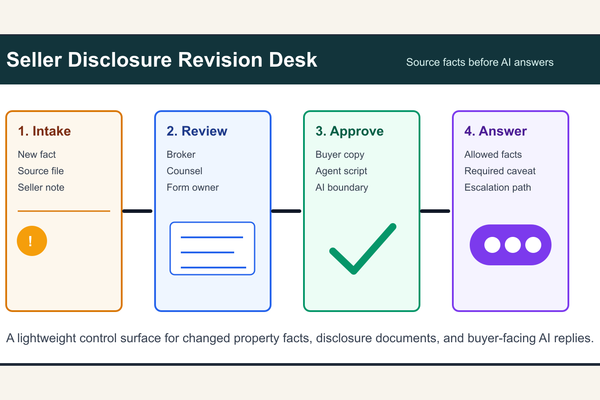
Build a Seller Disclosure Revision Desk Before AI Answers Buyers
Changed property facts need source records, review, approved language, and AI permission before buyer-facing answers go out.
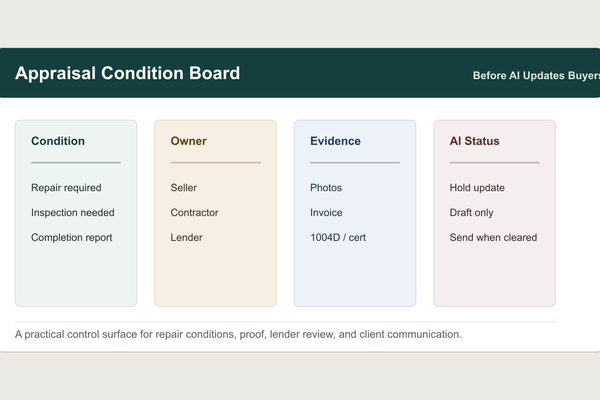
Build an Appraisal Condition Board Before AI Updates Buyers
Before AI summarizes appraisal repairs or lender conditions for a buyer, give the team one board for status, evidence, review, and clearance.
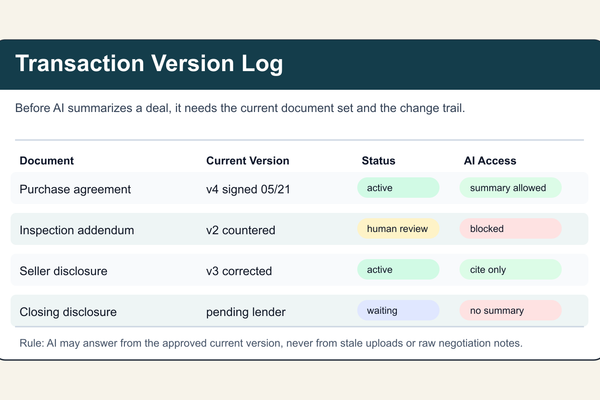
Build a Transaction Version Log Before AI Summarizes Deals
AI can summarize transaction status only after the team identifies the current agreement, superseded addenda, approved facts, and document changes it is allowed to use.
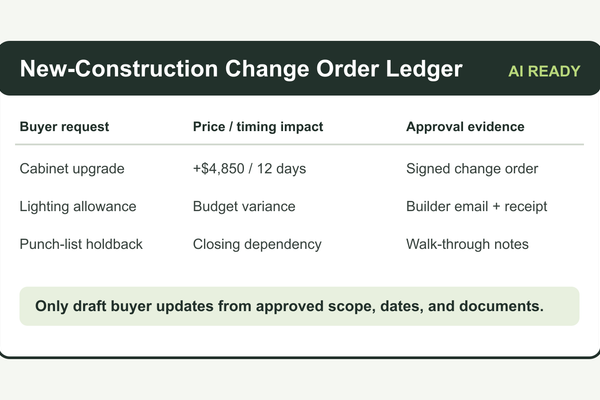
Build a New-Construction Change Order Ledger Before AI Updates Buyers
New-construction buyer updates need approved scope, price, timing, and warranty evidence before AI drafts client-facing language.
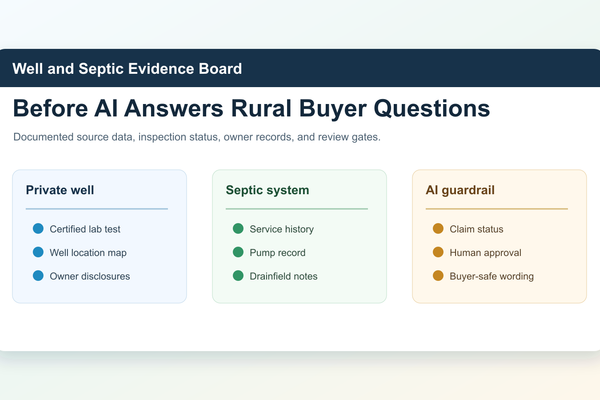
Build a Well and Septic Evidence Board Before AI Answers Rural Buyer Questions
Private wells and septic systems need verified source records before AI drafts buyer updates. A simple evidence board keeps rural-property communication fast, useful, and accountable.
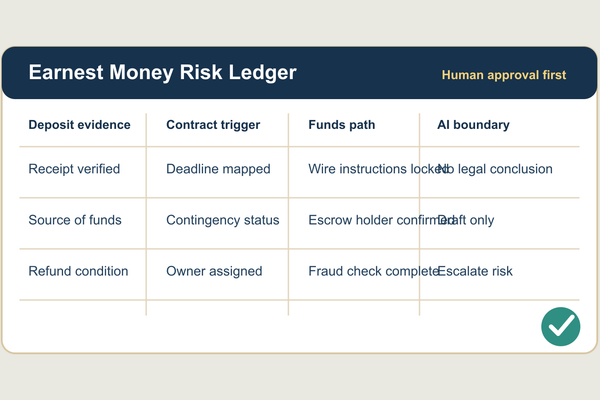
Build an Earnest Money Risk Ledger Before AI Explains Deposits
Earnest money questions are financial, contractual, and fraud-sensitive. Real estate teams need a risk ledger before AI drafts deposit explanations for buyers or sellers.
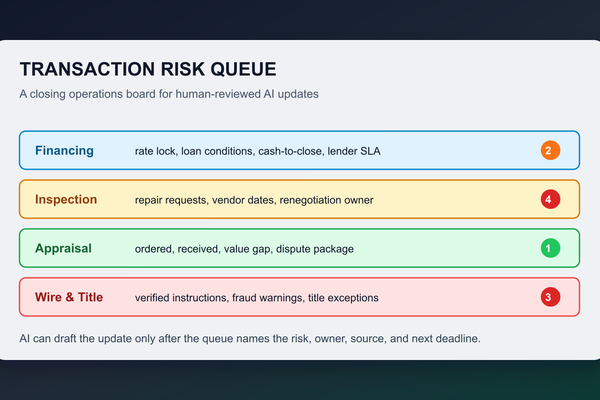
Build a Transaction Risk Queue Before AI Updates Closings
AI can draft polished closing updates, but real estate teams need a transaction risk queue first so financing, appraisal, inspection, title, and wire risks stay visible before clients hear from automation.