#Real Estate Crm
Insights tagged with Real Estate Crm — AI, real estate, and business innovation from Ben Laube.
View all insights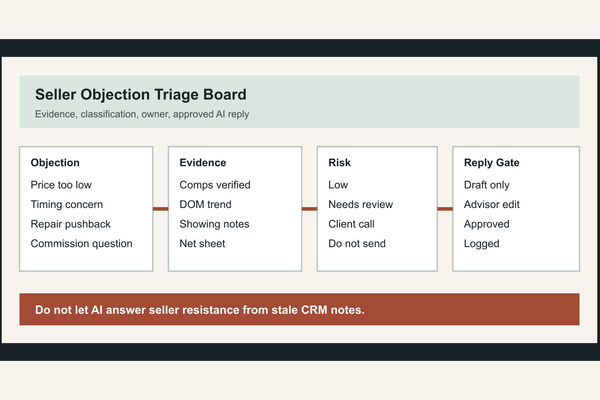
Build a Seller Objection Triage Board Before AI Replies to Pushback
Seller pushback should not be answered from stale CRM notes. A triage board keeps objection type, evidence, owner, risk, and AI permission visible before replies go out.
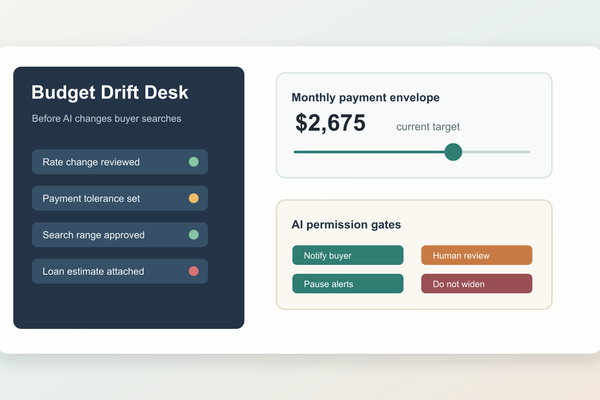
Build a Buyer Budget Drift Desk Before AI Changes Searches
AI can adjust buyer searches only after the CRM knows which budget signals are verified, stale, or waiting for human review.
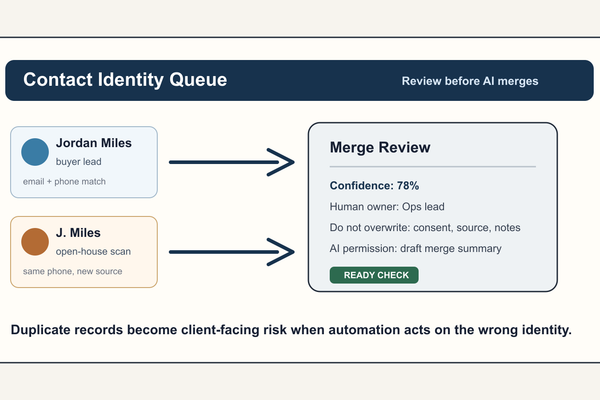
Build a Contact Identity Queue Before AI Merges Your CRM
AI deduplication can clean a CRM or quietly break client trust. A contact identity queue keeps source history, consent, households, and human approval visible before records merge.
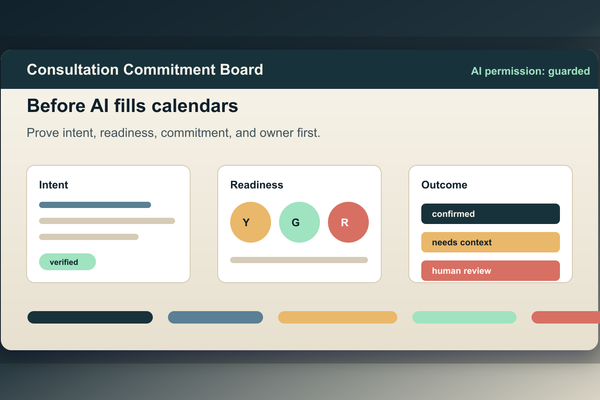
Build a Consultation Commitment Board Before AI Fills Calendars
AI booking tools should not treat every calendar slot as equally ready. A consultation commitment board keeps intent, readiness, reminders, and no-show recovery visible before automation confirms meetings.
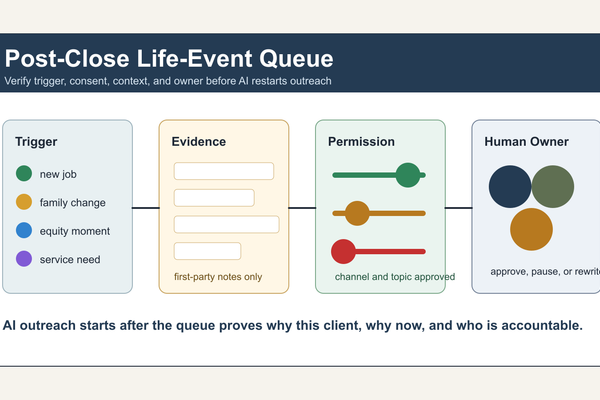
Build a Life-Event Queue Before AI Restarts Past-Client Outreach
Past-client AI outreach needs verified life-event triggers, contact permission, current context, and a human owner before automation restarts the relationship.
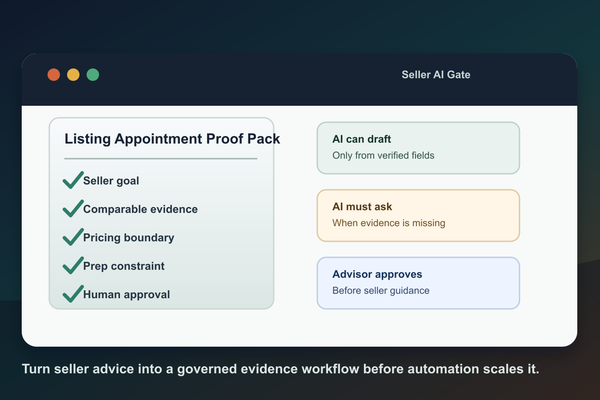
Build a Listing Appointment Proof Pack Before AI Advises Sellers
Before AI drafts seller pricing guidance, build a CRM proof pack that separates verified market evidence, seller boundaries, and advisor approval.
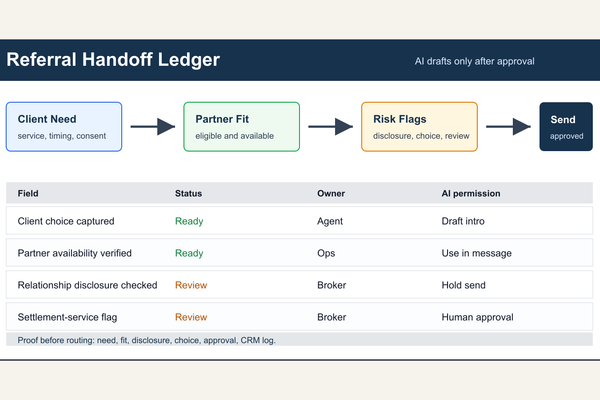
Build a Referral Handoff Ledger Before AI Routes Clients
AI should not route clients to referral partners from stale CRM habits. Use a referral handoff ledger to prove fit, choice, disclosure, availability, and human approval first.
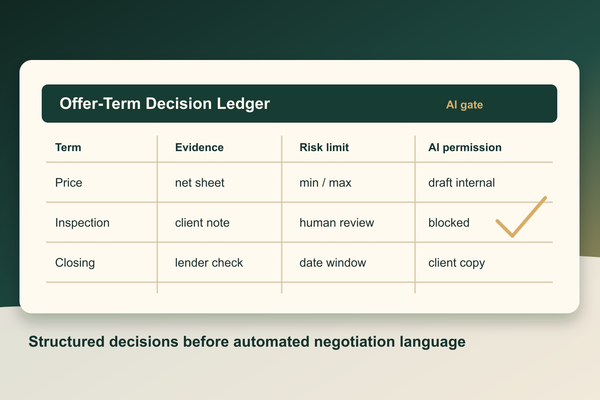
Build an Offer-Term Decision Ledger Before AI Drafts Counteroffers
AI should not draft counteroffer language from scattered deal notes. Use an offer-term decision ledger to prove priorities, tradeoffs, risk limits, and approval first.
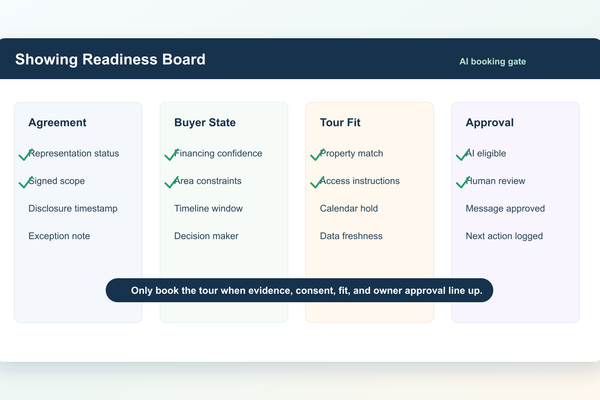
Build a Showing Readiness Board Before AI Books Buyer Tours
AI scheduling should not book buyer tours from scattered CRM notes. Use a showing readiness board to prove agreement status, buyer context, property fit, and approval first.
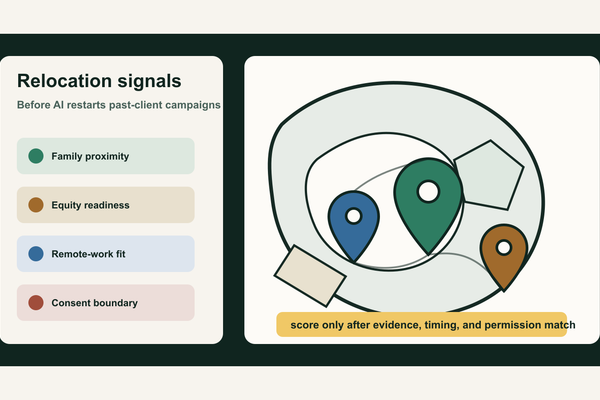
Build a Relocation Signal Board Before AI Sends Move-Ready Campaigns
AI should not infer relocation intent from stale CRM notes. Build a relocation signal board first so move drivers, timing, permission, and human ownership are clear before past-client campaigns restart.
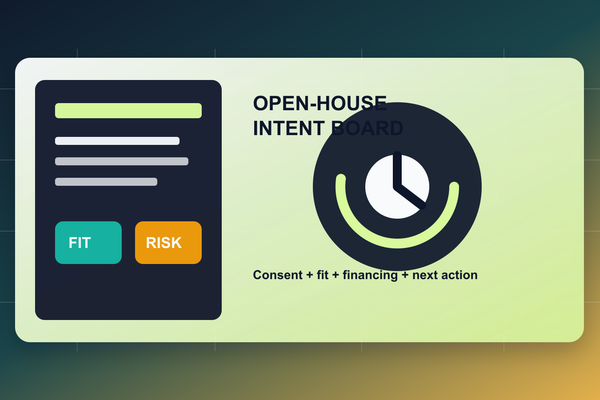
Build an Open-House Intent Board Before AI Scores Visitors
Open-house AI follow-up needs more than a sign-in sheet. Build an intent board first so visitor consent, fit, financing, and next action are verified before AI scores the lead.
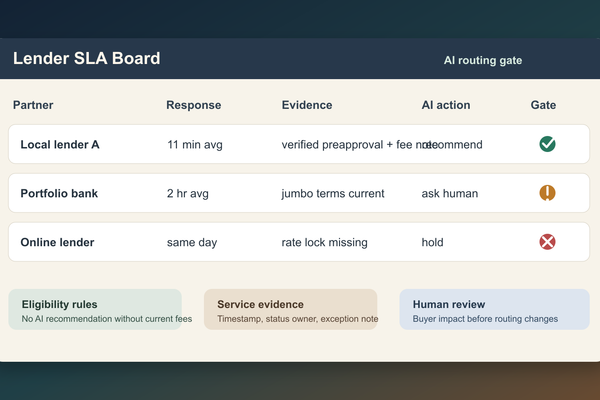
Build a Lender SLA Board Before AI Recommends Financing Partners
AI should not recommend lenders from stale CRM memory. A lender SLA board gives real estate teams current service evidence, eligibility gates, and human review before financing advice reaches buyers.
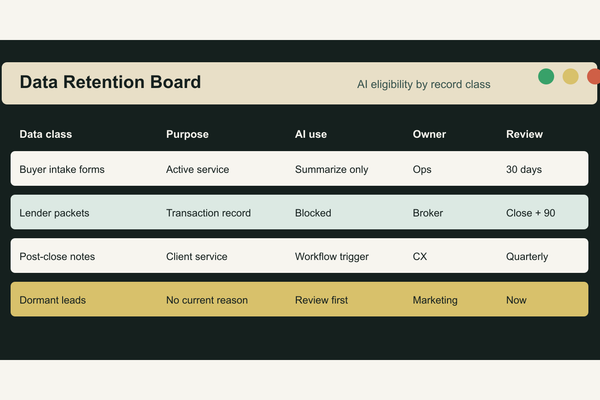
Build a Data Retention Board Before AI Learns From Client Files
AI workflows should not treat every old CRM note, transaction file, and client document as approved context. Build a retention board first so client data has purpose, ownership, AI eligibility, and review dates.

Build an Insurance Readiness Ledger Before AI Advises Offers
Home insurance is now a buyer qualification variable. Real estate teams need a structured insurance-readiness ledger before AI drafts affordability guidance or offer strategy.

Build a Financing Readiness Tracker Before AI Advises Buyers
AI can help buyers understand affordability, lender options, and offer strategy, but real estate teams need a financing readiness tracker first so advice is grounded in verified loan evidence instead of optimistic assumptions.
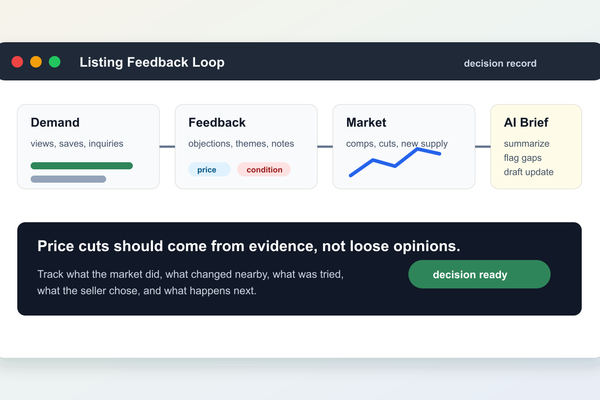
Build a Listing Feedback Loop Before AI Suggests Price Cuts
AI can help sellers understand pricing, showings, objections, and next steps, but real estate teams need a structured listing feedback loop first so price-cut advice is based on buyer behavior instead of loose opinions.
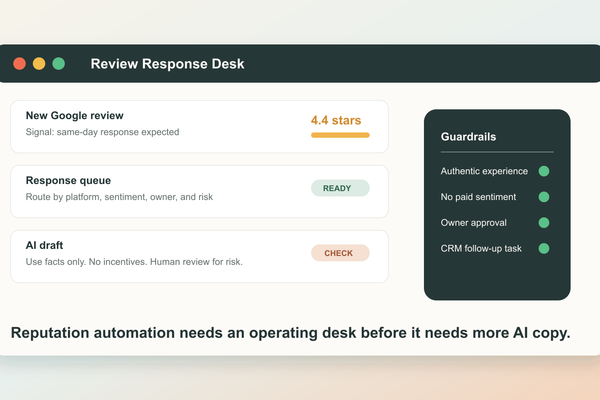
Build a Review Response Desk Before AI Manages Reputation
AI can help draft review replies, but real estate and local service teams need a response desk first so reputation work stays timely, personal, compliant, and tied to CRM follow-up.
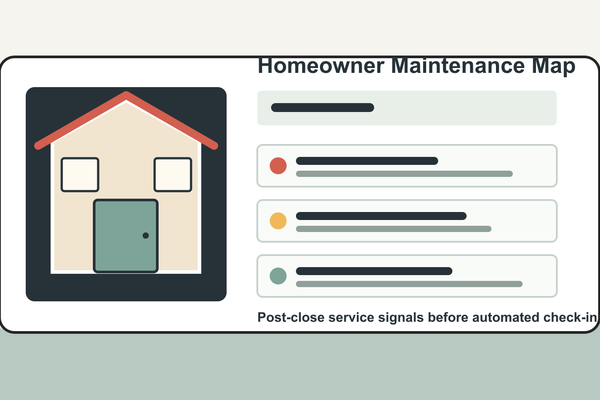
Build a Homeowner Maintenance Map Before AI Sends Check-Ins
AI past-client follow-up works better when the CRM knows the home, the owner, the service moment, and the consent boundary before it writes the message.

Ask AI Vendors for Workflow Proof, Not Another Demo
AI demos are easy to polish. Real estate teams should ask vendors to prove the workflow with CRM writes, permissions, exceptions, audit trails, and business outcomes before buying.
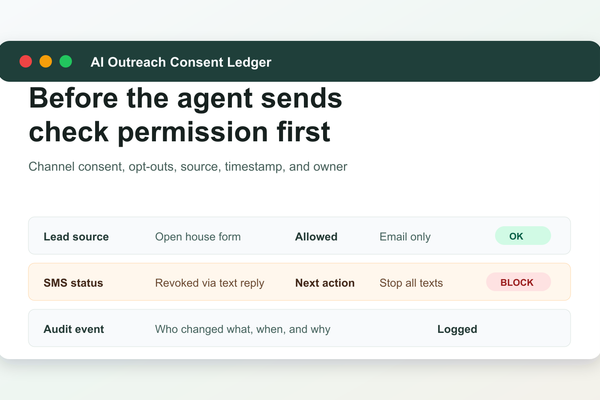
Give AI Outreach a Consent Ledger Before It Scales
AI follow-up needs more than better copy. Real estate teams need a consent ledger that tells every agent, CRM workflow, and marketing tool which channel is allowed before outreach scales.
Before You Add AI Agents, Clean Your Real Estate CRM
AI agents only perform as well as the CRM data behind them. Use this practical audit to clean stages, sources, consent, notes, and ownership before automating real estate follow-up.